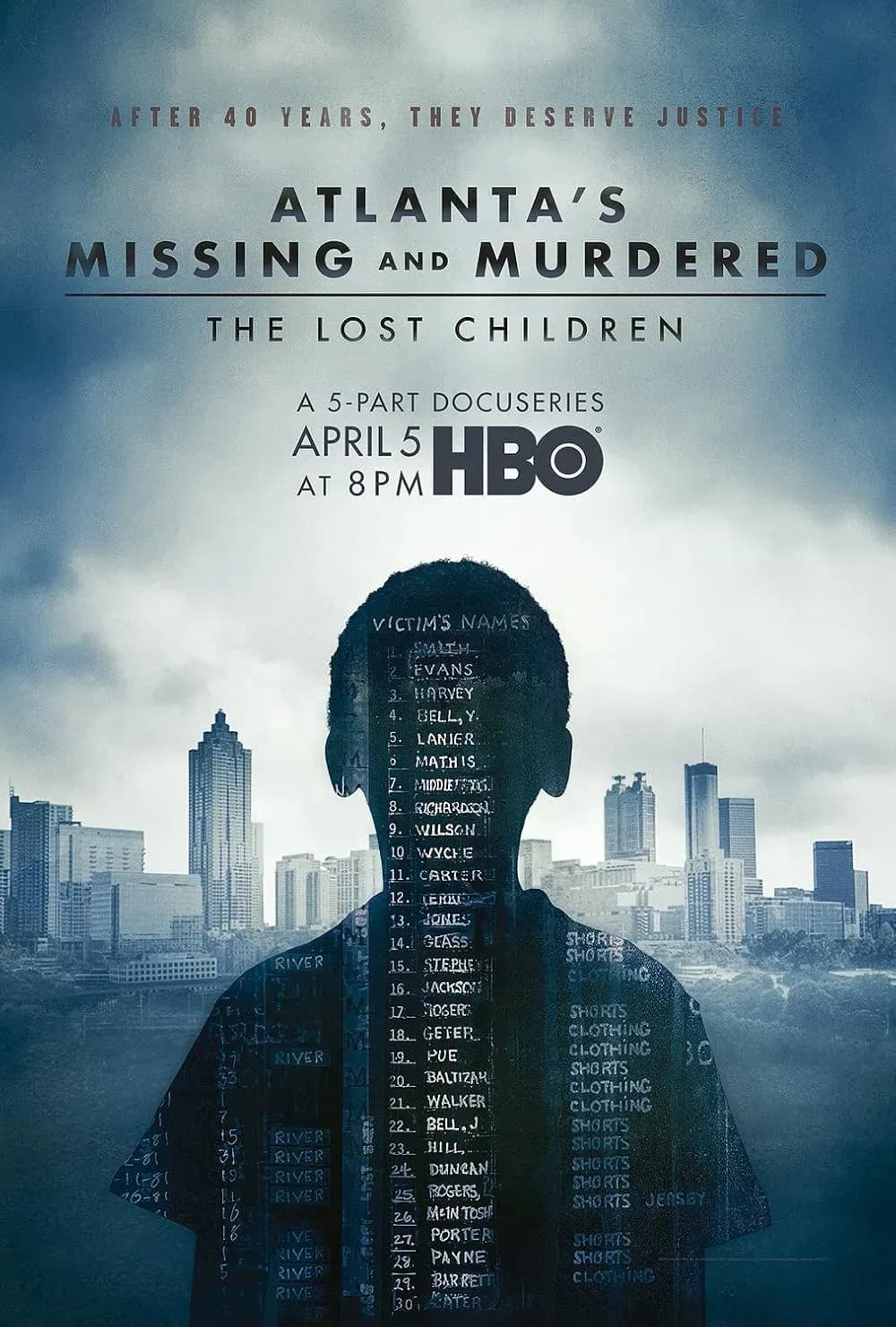
Atlanta's Missing and Murdered: Exposing Injustice
The HBO docuseries that reopened questions about the Atlanta child murders and a controversial conviction
Between July 1979 and May 1981, Atlanta became the center of one of America's most haunting crime sprees. At least 28–30 African-American children, adolescents, and young adults disappeared and were murdered during this period, many of them strangled and left in woods or rivers across the city.
The case that emerged from this tragedy—and the 2020 HBO docuseries *Atlanta's Missing and Murdered: The Lost Children*—reveals a darker story of racial injustice, pressure to solve crimes, and a conviction that remains controversial nearly four decades later.
**The Victims and the Early Investigation**
The killings began in mid-1979, when Edward "Teddy" Smith, 14, and Alfred "Q" Evans, 13, disappeared four days apart. Their bodies were discovered together on July 28, 1979, in a wooded area. Smith bore a .22-caliber gunshot wound to his upper back—the first indication of the violence to come. Over the following months, more children vanished. Milton Harvey, 14, disappeared on September 4, 1979, while running an errand; his bicycle was found a week later, but his body wasn't recovered until November.
As the death toll climbed, Atlanta descended into fear. Parents demanded action. The city faced mounting pressure to arrest a killer.
**The Wayne Williams Conviction**
In 1982, Wayne Williams, a 23-year-old Atlanta native, was arrested, tried, and convicted. Notably, he was convicted only of two adult murders—including Nathaniel Cater, 27, who was asphyxiated and disappeared on May 22, 1981. Williams received two consecutive life sentences.
However, what happened next set the stage for decades of controversy: police attributed many of the child murders to Williams post-conviction without charging him in those cases. The task force investigating the murders shut down shortly after his conviction, and most cases were closed and attributed to him.