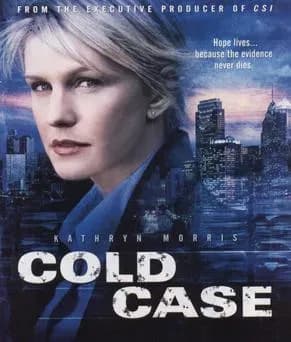
Cold Case Files: How Modern Forensics Solved Decades-Old Murders
A&E's documentary series uses DNA, genealogy, and criminal psychology to crack long-unsolved cases
Cold Case Files, the A&E Network reality legal documentary series hosted by veteran crime journalist Bill Kurtis, transforms decades-old mysteries into solvable investigations by leveraging modern forensic breakthroughs. Originally produced by Tom Golden, the rebooted series demonstrates how DNA technology, genealogical databases, and advances in criminal psychology can finally deliver justice when traditional detective work stalled.
The show's power lies in its formula: revisit unsolved murders, introduce contemporary forensic tools, and reveal how killers were finally identified and convicted. Early episodes established the series' promise. In "A Sealed Fate," Clyde Carl Wilkerson was convicted after DNA linked him to two cold cases that had languished unsolved for 37 years. That same episode featured "Deadly Divorce," in which Larry Britt faced murder charges for his ex-wife's death—a crime committed 24 years earlier that was solved only after DNA from blood found in his truck matched the victim.
As the series progressed, investigators and audiences witnessed the evolution of forensic capability. Season 2 episodes showcased increasingly sophisticated techniques. The case of Helene Pruszynski, whose body was discovered in a snowy Denver field in 1980, remained unsolved for 37 years until forensic genealogy—cross-referencing public DNA databases—identified her killer. That breakthrough, featured in the episode "Ice Cold in Denver," represented a paradigm shift in cold case methodology.
Lisa Ziegert's murder, featured in "Murder by Moonlight," illustrated another technological advance: DNA phenotyping. Her body was found on Easter Sunday, and the case grew cold. Years later, phenotyping technology—which predicts physical traits from DNA profiles—revived the investigation and ultimately identified her killer, proving that even incomplete genetic evidence could yield results when married with modern science.