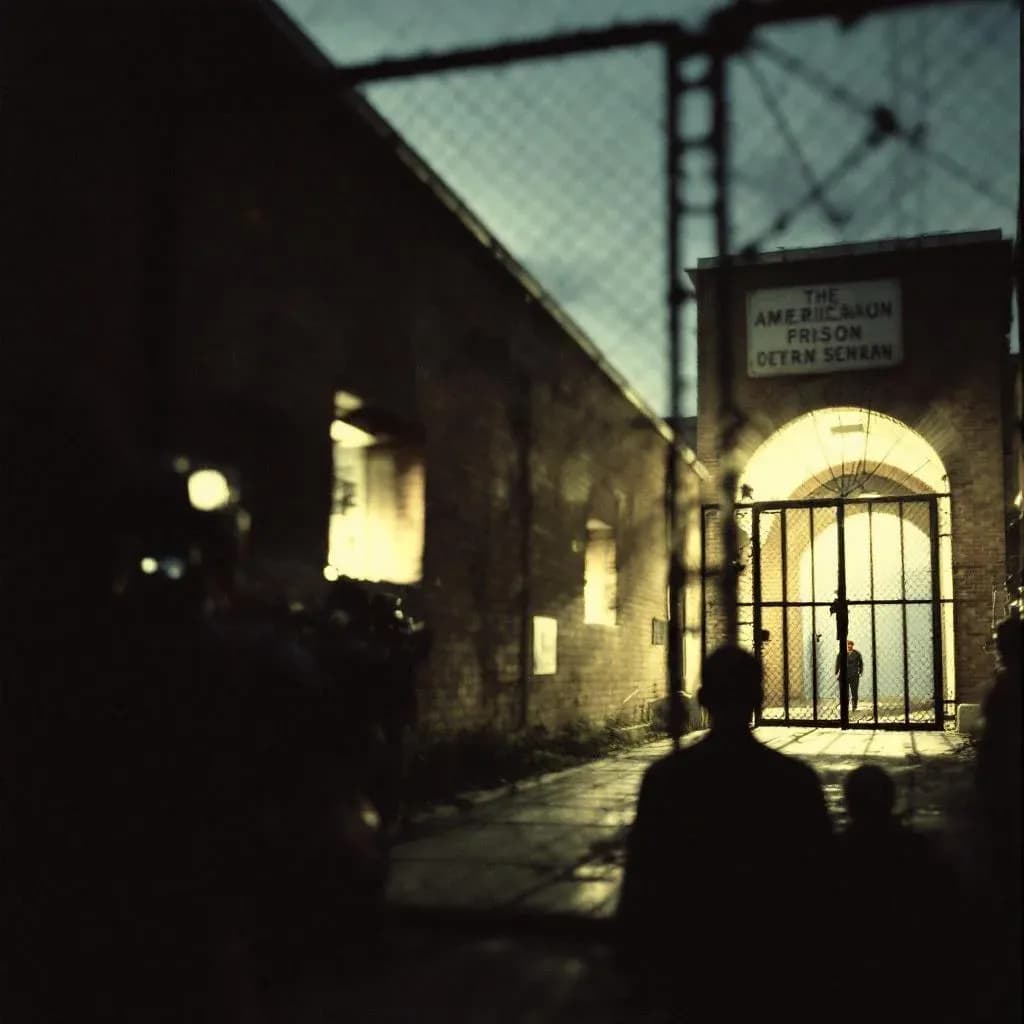
The Night of the Ravelin: March 30, 1985
In the early morning hours of March 30-31, 1985, unknown assailants broke into the Haysom residence at 421 Oak Terrace Lane. Derek Haysom, 72, and his wife Nancy, 43, were found dead with numerous stab wounds—Derek suffered 36 stab wounds, Nancy 38. It was brutal, methodical, and violent.
Bedford County police and the FBI quickly focused their investigation on Elizabeth Haysom, the couple's daughter, and her boyfriend: a 19-year-old German exchange student named Jens Söring from the University of Virginia, who had entered the country using fraudulent documents.
Forbidden Love and Deception
Söring and Haysom met in 1984 at the university and quickly became a couple—but their relationship was marked by financial hardship and a dysfunctional family dynamic. Nancy's relationship with her parents was strained, and Derek was domineering and controlling.
Shortly after the murders, the pair fled together. They began forging checks and traveled to London, Bangkok, and Nepal. Police caught them for check fraud in London in April 1985.
During interrogations in Asia, Elizabeth Haysom initially claimed she had planned to kill her parents to "be free of them"—and that Söring was the perpetrator. But Söring maintained the opposite: that Haysom had committed the murders, and that he either played a passive role or was not involved at all.
The Conviction: June 1986
The trial in Bedford County Circuit Court proceeded swiftly. The prosecution presented:
- DNA Evidence: Blood from the victims was found in Söring's car
- Fingerprints: Matches found at the crime scene
- Lie Detector Tests: Söring failed the tests
- Flight and Confession: Their joint flight and Haysom's confession evidence were interpreted as complicity
Söring was convicted of accessory to murder and received two life sentences without possibility of parole. Elizabeth Haysom pleaded guilty as an accessory before the fact and received 90 years. The disparity in sentences became widely debated: Was Söring truly the murderer, or was she?
33 Years in Prison—and a Transformation
Between 1986 and 2019, Söring remained incarcerated at Augusta Correctional Center. But something unexpected occurred: the convicted murderer became a model prisoner. He converted to Catholicism, earned a bachelor's degree and later a master's degree, and taught fellow inmates. His case gained international attention—especially because the facts were so contradictory.
Multiple times, Söring attempted to overturn his conviction. Virginia's Supreme Court rejected his appeals, but his case attracted international scrutiny. German diplomats remained cautious—his father Klaus had served as a consul in Atlanta during the 1980s, and an international scandal could have damaged both the family and Germany's diplomatic standing.
The Surprising Release: November 2019
On November 17, 2019, Governor Ralph Northam (Democrat) did the improbable: he released Söring based on good-time credits and a clemency agreement. In a press statement, it read: "After 33 years... it is time for justice and mercy."
Two days later, Söring was deported to Germany. The condition was simple: he could never return to the United States.
The release was politically sensitive. Victim advocates protested, but Northam stood firm. Söring's lawyers argued that the DNA evidence may have been flawed (an argument later partially supported by forensic experts) and that Haysom's confession in the case could have been coerced.
Netflix Reopens the Case
Exactly four years after Söring's release—on November 7, 2023—Netflix released the three-part documentary series "Jens Söring: Deadly Passion." The director was German filmmaker Eric Friedler, known for critical investigative documentaries.
The series re-examines the case and presents two possible scenarios:
Scenario 1 — Söring is guilty: DNA evidence, lie detector results, joint flight, and Haysom's confession weigh heavily against him.
Scenario 2 — Haysom is guilty, Söring is a scapegoat: Diplomatic pressure may have forced Söring to take the blame, while Haysom (the daughter, who later pursued a career) received a lighter sentence.
The Netflix documentary has reignited a debate now being conducted intensely in Germany, the United Kingdom, and the United States.
Open Questions Remain
Söring still denies the crime. He lives in Germany, has written a book, and gives interviews. Elizabeth Haysom was released in 2014 and lives quietly. The victims—Derek and Nancy Haysom—have long been forgotten.
The true story remains a mystery: Is this a case where the justice system sent an innocent man to prison? Or a case where a diplomat's son benefited from his nationality? true crime cases like this demonstrate how complex investigations become when family, love, and international diplomacy intersect.