True crime news logo
  • News

Sign up for our newsletter and get the latest stories

Never miss the latest true crime news, reviews and top lists — plus new podcasts, series, films and books.

You can unsubscribe with one click from any email.

True crime news logo

The international true crime destination. Cases, documentaries, podcasts and travel routes.

© 2026 truecrime.news. All rights reserved.

Making a Murderer reveals the complexity of a miscarriage of justice

Making a Murderer: The Netflix Case That Divided True Crime Audiences

How a documentary series brought Wisconsin's contested murder conviction into the global spotlight

Published
May 26, 2025 at 10:00 PM

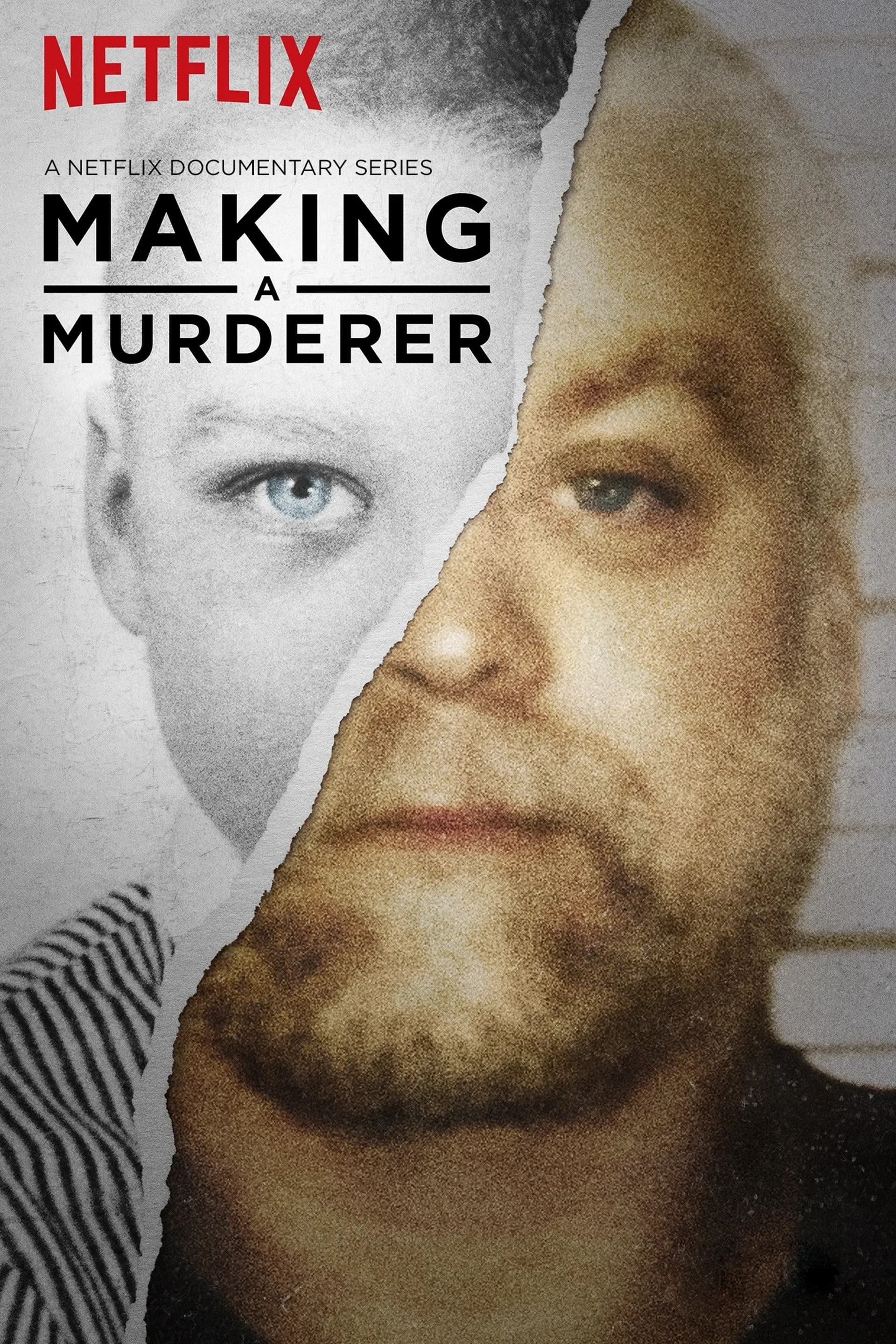
In December 2015, directors Laura Ricciardi and Moira Demos released Making a Murderer on Netflix, an American true crime documentary that would captivate international audiences and reignite debate about the American justice system. The series chronicles a complex and contested narrative spanning from 1985 to 2007, centered on Steven Avery of Manitowoc County, Wisconsin.

Avery's story begins with tragedy. In 1985, he was convicted of sexual assault and attempted murder, serving 18 years in prison for a crime he did not commit. In 2003, DNA evidence—specifically a single pubic hair—exonerated him. Upon release, Avery filed a $36 million civil lawsuit against Manitowoc County, setting the stage for what would follow.

However, Avery's past extended beyond his wrongful conviction. Before 1985, he faced accusations of sexual assault from two women. One incident involved his cousin, whom he allegedly threatened at gunpoint to pull over; her mother claimed Avery raped her and threatened her life if she reported it. A second woman allegedly did not report a sexual assault due to threats from Avery. His history also included involvement in robberies and a disturbing incident with a cat thrown onto a bonfire. Additionally, Avery was physically abusive to both a former wife and fiancée.

In 2005, Avery's life took another dramatic turn when he was arrested and charged with the murder of Teresa Halbach, a photographer for AutoTrader magazine who had visited his property. The evidence presented at trial proved substantial: Avery's DNA was found on the hood latch of Halbach's vehicle; a bullet recovered from his garage was fired by his rifle; Halbach's belongings—her phone and camera—were discovered approximately 20 feet from his door; and physical evidence was located in a firepit on Avery's property.

The day of Halbach's disappearance proved particularly damning. Avery had called her three times, requesting "that same girl who was here last time." During these calls, he used his sister's number and provided a false name, while blocking his own number. In 2007, a jury found Avery guilty of intentional homicide.

The documentary also focuses on Brendan Dassey, Avery's nephew, who was only 16 at the time of the 2005 events. Dassey confessed to assisting Avery in the crime, including allegations of chaining Halbach to a bed, sexual assault, cutting her throat, and shooting her in the head. However, Dassey's account changed across multiple interviews. He was convicted as an accessory to murder and guilty of sexual assault, party to homicide, and mutilation of a corpse. Dassey is described as having learning difficulties and a low IQ.

While Avery was imprisoned for his initial 1985 conviction, prosecutors noted an especially troubling incident: according to an email from prosecutor Ken Kratz to The Wrap, Avery had told an inmate of his intention to build a "torture chamber" for young women after his release.

Making a Murderer presented these facts to a global audience, yet the series became the subject of significant debate. While the documentary brought attention to the case, viewers and commentators interpreted the evidence and narrative in markedly different ways, reflecting broader questions about documentary objectivity, the presentation of criminal evidence, and the nature of justice itself.

The series remains one of Netflix's most discussed true crime offerings, demonstrating the power of documentary filmmaking to shape public discourse around criminal cases and investigative practices.

**Sources:** - https://en.wikipedia.org/wiki/Making_a_Murderer - https://vocal.media/geeks/five-important-facts-making-a-murderer-left-out - https://depauliaonline.com/18594/artslife/film-tv/recap-making-a-murderer/ - https://www.watchmojo.com/articles/top-10-details-making-a-murderer-left-out - https://www.youtube.com/watch?v=mQZ2EakudbI

Read more

A figure resembling Donald Trump holding a newspaper with a bold headline outside a Manhattan courthouse, while a crowd of reporters and protesters gather in the background
Case

Central Park Five: How Five Teenagers Were Wrongly Convicted

A motel room at the Rockford Inn, featuring a vacant bed with an untouched suitcase nearby, hinting at the tragic discovery of Amy Fry-Pitzen's suicide and the ongoing mystery of her missing son, Timmothy.
Case

The Timmothy Pitzen Case: America's Enduring Child Disappearance Mystery

A figure resembling George Zimmerman walks out of a Florida courthouse, surrounded by a throng of reporters and protesters holding signs, capturing the tension of a highly publicized trial and its societal impact.
Case

How a West Point Failure Led to Federal Court

Related Content
A figure resembling Donald Trump holding a newspaper with a bold headline outside a Manhattan courthouse, while a crowd of reporters and protesters gather in the background

Central Park Five: How Five Teenagers Were Wrongly Convicted

A motel room at the Rockford Inn, featuring a vacant bed with an untouched suitcase nearby, hinting at the tragic discovery of Amy Fry-Pitzen's suicide and the ongoing mystery of her missing son, Timmothy.

The Timmothy Pitzen Case: America's Enduring Child Disappearance Mystery

A figure resembling George Zimmerman walks out of a Florida courthouse, surrounded by a throng of reporters and protesters holding signs, capturing the tension of a highly publicized trial and its societal impact.

How a West Point Failure Led to Federal Court

The Girl in the Picture: Society's Blind Spots

The Girl in the Picture: One Woman's Hidden Tragedy

Advertisement
SS

Susanne Sperling

View all stories →
Share this post: