True crime news logo
  • News

Sign up for our newsletter and get the latest stories

Never miss the latest true crime news, reviews and top lists — plus new podcasts, series, films and books.

You can unsubscribe with one click from any email.

True crime news logo

The international true crime destination. Cases, documentaries, podcasts and travel routes.

© 2026 truecrime.news. All rights reserved.

Medical Detectives reveals crime's depth

Medical Detectives: How Forensic Science Solved America's Most Baffling Crimes

The pioneering series that revolutionized true crime television by exposing the forensic techniques behind closed cases

Published
May 26, 2025 at 10:00 PM

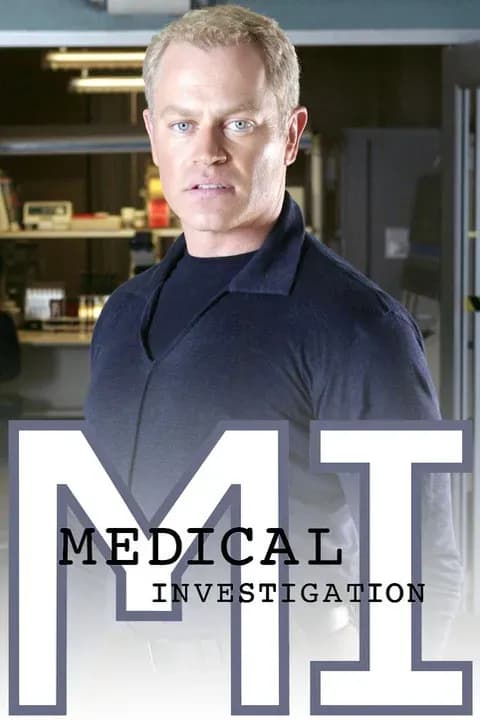
Medical Detectives premiered on Discovery Channel in 1996 before moving to TLC, becoming one of television's most influential true crime programs. The series was created by Paul Dowling and features the distinctive narration of Peter Thomas, whose measured tone became synonymous with forensic investigation storytelling. With more than 400 episodes to its credit, the show inspired an entire generation of crime television, including the blockbuster CSI franchise.

The series format combines detailed reenactments with interviews from forensic experts, investigators, and pathologists who walk viewers through each case methodology. Rather than focusing solely on the dramatic aspects of crime, Medical Detectives emphasizes the scientific process—how experts identify evidence, analyze it rigorously, and ultimately build irrefutable cases. The show explores forensic disciplines including DNA analysis, ballistics examination, facial reconstruction, fiber analysis, and digital forensics.

**Notable Cases: Breakthroughs in Forensic Science**

One of the series' most striking investigations occurred on the Navajo Nation, spanning 25,000 square miles across Utah, Colorado, New Mexico, and Arizona. When over 12 young people died within six weeks of the same mysterious disease, authorities initially feared an epidemic. The breakthrough came from an unexpected source: Navajo medicine men provided critical information that led investigators "halfway around the world" to identify the killer. The episode, titled "With Every Breath," demonstrates how traditional knowledge combined with modern forensics can solve seemingly impossible cases.

Another case highlighted the dangers lurking in hospital environments. At a Cleveland hospital, multiple infants developed unexplained lung bleeding and infections within months. Dr. Ruth Etzel led the investigation by meticulously reviewing medical records. Rather than a criminal case, investigators uncovered a disease outbreak affecting over 30 cases. Identifying the source prevented further tragedies and exemplifies how forensic investigation extends beyond homicides to protect public health.

The "Talking Skull" episode from Season 3 showcased forensic anthropology's power. Human remains discovered near a Boy Scout camp near Farmington, Missouri, in 1987 presented investigators with a puzzle. Facial reconstruction helped identify the victim, while tattered blue jeans provided crucial evidence. Forensic pathologist Dr. Mary Case's examination of a small skull wound ruled out accidental death, confirming homicide. This investigation again involved evidence leading "halfway around the world," ultimately resulting in a confession.

More recent cases demonstrated how technology advanced forensic investigation. "All That Glitters is Gold" involved the disappearance of Megan, whose car was found bullet-riddled and abandoned after a 2:45 a.m. party departure. With no eyewitnesses, investigators employed laser ballistics analysis, onboard computer data extraction, and trace evidence including glitter particles. A suspect named Sanchez, an electrician in the local film industry, was connected through his roommate's confirmation of assault rifle ownership. Forensic evidence ultimately proved his guilt despite the absence of witnesses.

**Why Medical Detectives Matters**

The series' impact on true crime television cannot be overstated. By focusing on forensic methodology rather than sensationalism, Medical Detectives educated viewers about the scientific foundations of criminal justice. The show raised questions about ethical considerations in forensics, the reliability of various investigative techniques, and the human cost of criminal investigations.

Today, the series remains accessible on multiple streaming platforms including FilmRise True Crime, HLN, and Pluto TV, allowing new audiences to appreciate the forensic breakthroughs that defined criminal investigation in the late 20th century. For anyone interested in understanding how science solves crime, Medical Detectives remains essential viewing.

**Sources**

https://www.kriminyt.dk/da/medical-detectives-afslrer-forbrydelsers-dybde

https://www.youtube.com/watch?v=qeUlf9GI5hw

https://www.youtube.com/watch?v=M3vF7pxDAcg

https://www.youtube.com/watch?v=vs_60lxsSyA

https://www.youtube.com/watch?v=P3T3ALc9R8s

Read more

True Crime All The Time impresses true crime audience
Podcast

True Crime All The Time: From Basement Hobby to Podcast Empire

Casefile True Crime: Unveiling Crime's Depths
Podcast

Casefile True Crime: Australia's Leading Podcast

Truecrimepodden captivates and challenges the crime genre
Podcast

Truecrimepodden: A Norwegian Podcast's Deep Dive Into Murder and Mystery

Related Content
True Crime All The Time impresses true crime audience

True Crime All The Time: From Basement Hobby to Podcast Empire

Casefile True Crime: Unveiling Crime's Depths

Casefile True Crime: Australia's Leading Podcast

Truecrimepodden captivates and challenges the crime genre

Truecrimepodden: A Norwegian Podcast's Deep Dive Into Murder and Mystery

Bear Brook podcast challenges justice

Bear Brook: How a Podcast Exposed Justice's Darkest Questions

Advertisement
SS

Susanne Sperling

View all stories →
Share this post: