True crime news logo
  • News

Sign up for our newsletter and get the latest stories

Never miss the latest true crime news, reviews and top lists — plus new podcasts, series, films and books.

You can unsubscribe with one click from any email.

True crime news logo

The international true crime destination. Cases, documentaries, podcasts and travel routes.

© 2026 truecrime.news. All rights reserved.

Murder She Solved: True Crime reveals deep moral failures

Murder She Solved: The Elena Busiakos Case

How a YouTube series revisited the 2001 Woodinville murder that ended in conviction—and continued legal battles

Published
May 26, 2025 at 10:00 PM

On February 9, 2001, Elena Busiakos was discovered dead, stuffed in the trunk of her own car in the parking lot of Woodinville Athletic Club in Washington—approximately one mile from her home. The 24-year-old's body bore signs of strangulation, with bruising visible on her face and neck. Her clothes were fully intact but disheveled, with socks pulled up. Physical evidence suggested sexual activity prior to her death, though investigators would struggle with DNA analysis throughout the case.

The couple had moved into a duplex in Woodinville just weeks earlier, in early 2001. In the days before her planned trip to California, Busiakos had discovered that her fiancé, Sione Lui, was communicating with a former girlfriend. She confronted him over the phone with the other woman present, delivering an ultimatum: either he would move out, or she would end the relationship. On the Friday before her disappearance, she closed their joint bank account—a definitive action suggesting her decision was final.

On the morning she was supposed to catch her flight, Busiakos vanished. Her last known cell phone call, at 7:04 a.m., was to check her flight status. Her suitcase had been packed oddly—a hair gel bottle left without its lid, toiletries included—and a rental car coupon was left behind. Investigators later theorized that Lui had packed the bag after her death.

Sione Lui, a former rugby player with a violent history (he had nearly killed a man during a match), became the primary suspect. The prosecution's theory was straightforward: he killed Busiakos at home after she dressed for bed, while her packing remained unfinished. Lui's actions that night raised suspicion—he called his sister in Hawaii at 1:15 a.m., an unusual time for a casual call.

However, the forensic evidence told a more complicated story. Nine fingerprints found on Busiakos's car did not match Lui. DNA recovered from the gearshift skirt and shoelaces belonged to an unknown male—someone whose identity was never established. While sperm was found in the victim, investigators could not generate a full DNA profile from it. Notably, no male DNA was recovered from under her fingernails, suggesting she had not scratched her attacker during a struggle.

Despite these evidentiary gaps, Lui was charged with second-degree murder and convicted in 2008. Scent-tracking dogs had been used during the investigation, though their reliability became a point of contention at trial. Her ex-husband provided an alibi, confirmed by his new wife—he had been home with their son at the time.

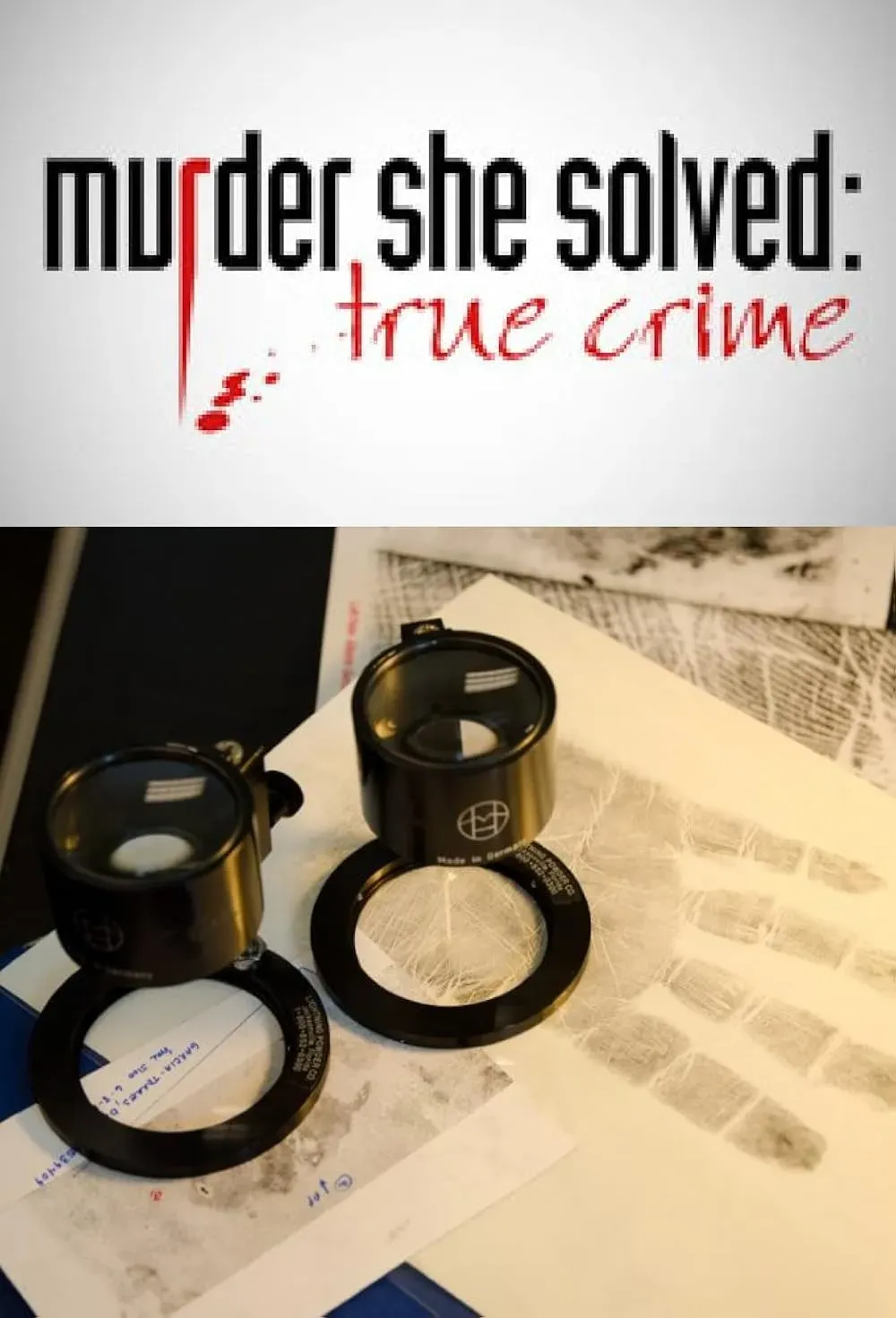
The case gained renewed attention through the YouTube series "Murder She Solved," which reexamined the investigation and conviction. The series prompted fresh scrutiny of the evidence, particularly the unidentified male DNA and the nine fingerprints that did not match the convicted man. In 2017, Lui filed a personal restraint petition challenging his conviction, which was heard by the Washington Supreme Court. The case remains a fixture in true crime documentaries, serving as an example of how physical evidence can complicate even seemingly straightforward criminal prosecutions.

**Sources:** https://www.youtube.com/watch?v=HH2lCXLoANw https://www.youtube.com/watch?v=Wy6XzzL-HRY https://law.justia.com/cases/washington/supreme-court/2017/92816-9.html https://www.youtube.com/watch?v=hLhCqsrcHVA https://readlang.com/library/644fb4d331a61591925845e4

Read more

A figure resembling John Wayne Gacy, dressed as Pogo the Clown, stands in a messy basement. Shovels and construction tools lie scattered amid damp earth and broken concrete near exposed wooden beams overhead.
Case

The Killer Clown: Inside John Wayne Gacy's 33 Murders

A serene stretch of Horsens Fjord where fishing boats sit idly, capturing the contrasting tranquility against the weight of a dark history—the site where Marei Stephansen was found in 1997.
Case

Unable to Publish: Case Verification Failed

A figure resembling Casey Anthony stands in an Orlando nightclub, surrounded by partygoers, with her expression detached and indifferent amidst the crowd's enthusiasm.
Case

Caylee Anthony: The Toddler Case That Divided America

Related Content
A figure resembling John Wayne Gacy, dressed as Pogo the Clown, stands in a messy basement. Shovels and construction tools lie scattered amid damp earth and broken concrete near exposed wooden beams overhead.

The Killer Clown: Inside John Wayne Gacy's 33 Murders

A serene stretch of Horsens Fjord where fishing boats sit idly, capturing the contrasting tranquility against the weight of a dark history—the site where Marei Stephansen was found in 1997.

Unable to Publish: Case Verification Failed

A figure resembling Casey Anthony stands in an Orlando nightclub, surrounded by partygoers, with her expression detached and indifferent amidst the crowd's enthusiasm.

Caylee Anthony: The Toddler Case That Divided America

A figure resembling Christina Grimmie signing autographs at a meet-and-greet, surrounded by fans, moments before the tragic event in Orlando's The Plaza Live venue.

The Murder of Christina Grimmie: Obsession and Tragedy

Advertisement
SS

Susanne Sperling

View all stories →
Share this post: