Award-Winning Crime Podcast Becomes TV Miniseries
The prestigious German podcast 'Zeit Verbrechen' is being transformed into a four-part television miniseries in 2024, bringing investigative journalism from audio waves to the small screen. The production marks a turning point in European true crime television: it demonstrates how investigative journalism can be translated into visual storytelling without losing its professional integrity.
The project unites four acclaimed filmmakers—Mariko Minoguchi, Jan Bonny, Helene Hegemann, and Faraz Shariat—each directing one standalone episode. This approach ensures that each case is examined from a distinct artistic perspective while preserving the journalistic rigor.
From Audio to Visuals
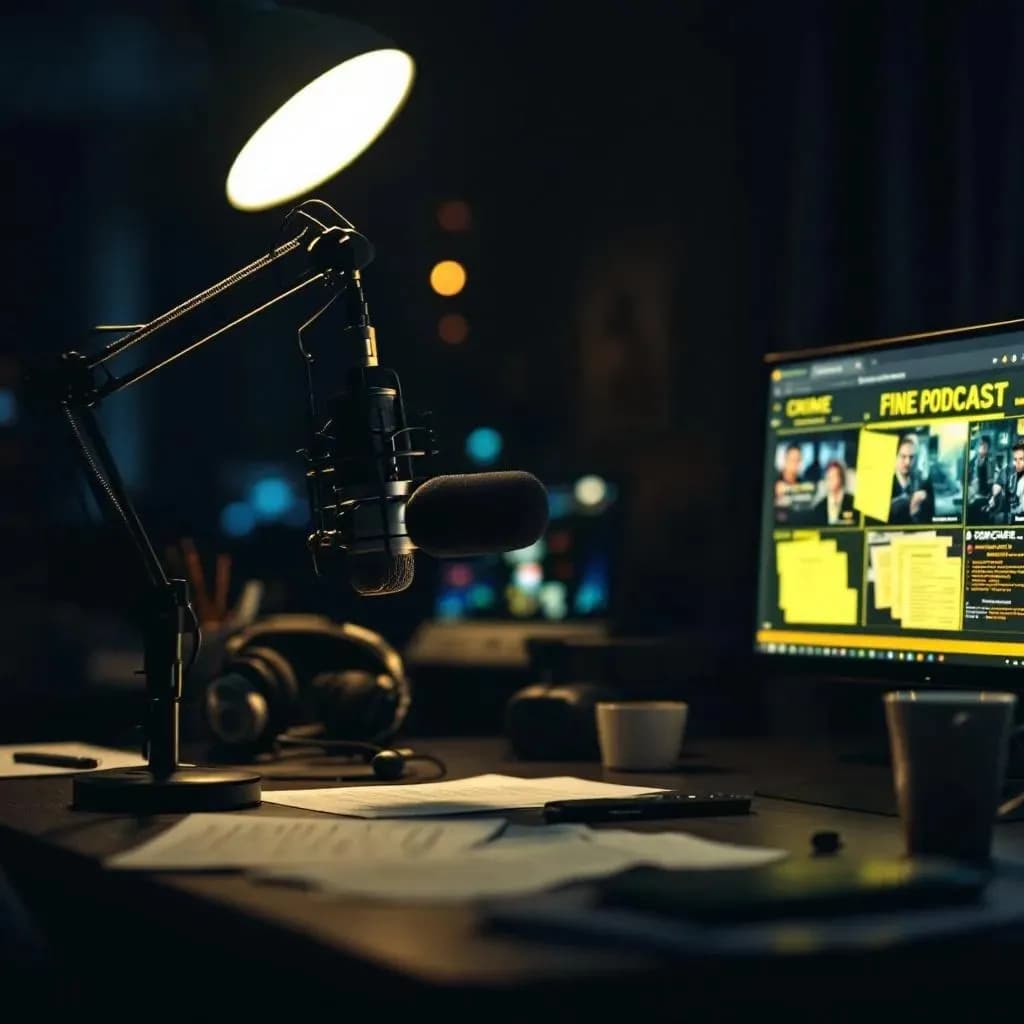
The podcast 'Zeit Verbrechen' was created by journalist Sabine Rückert, who has become known for in-depth criminal investigations and investigative journalism stories. The series is built on extensive research—sometimes conducted over several years—and combines thorough reconstruction of real crimes with interviews of investigators, family members, and sometimes the accused themselves.
Adapting it for television presents a unique challenge: How do you translate the suspense created through voice and sound design into visual storytelling? The miniseries solves this not merely by illustrating the podcast's content, but by reimagining it for the television medium. Screenwriters and directors employ archival material, original crime scenes, reconstructed sequences, and interviews to create a narrative that combines journalistic rigor with dramatic craftsmanship.
Four Perspectives on One Subject
Each episode receives its own director, giving the series artistic variation. Minoguchi brings experience from documentary filmmaking and has developed an aesthetic that merges fact with emotional authenticity. Bonny is known for precise visual language that conveys subtle psychological tensions.
Hegemann, renowned for experimental and socially critical cinema, uses this opportunity to create perspective shifts and alternative readings of established narratives. Shariat contributes international sensibility and often focuses on marginalized voices and social contradictions. This constellation ensures that the four cases don't feel like a homogeneous product, but rather as individually designed artworks—all united under the same investigative umbrella.
True Crime in the Quality Segment
True crime series and their societal impact has become a dominant genre in recent years. Formats like 'Historiens forbrydelser' and international productions have shown that audiences are interested in authentic crime investigation. Yet criticism is growing of superficial or sensationalized series that exploit real crimes as entertainment.
With this miniseries, the production deliberately positions itself in the quality segment. Collaboration with an established podcast with a loyal listener base signals seriousness and journalistic integrity—not just another true crime series, but a project driven by documentary rigor.
From Research to Production
The transition from audio research to visual production required substantial additional work. The original podcast episodes could not simply serve as a template; facts, interviews, and findings had to be restructured from scratch. This often meant supplementary research, new on-camera interviews, and identifying visual material that does justice to each case.
The producers have prioritized ethics in crime journalism as a central concern. Protection of private individuals, sensitivity toward victims and their families, and fair representation of all involved were non-negotiable. This distinguishes the production from sensational true crime formats that sometimes cross ethical boundaries.
A New Chapter for European Television
This miniseries is more than merely an adaptation of a popular podcast. It represents maturity in the European television landscape, where journalistic quality and artistic expertise converge. With four individual artists each leaving their mark, and a journalistic foundation that commands trust, the project has the potential to set new standards for documentary series.