# Dublin's Streets Hold a True Crime History That Stretches from 1796 to Modern Gangland
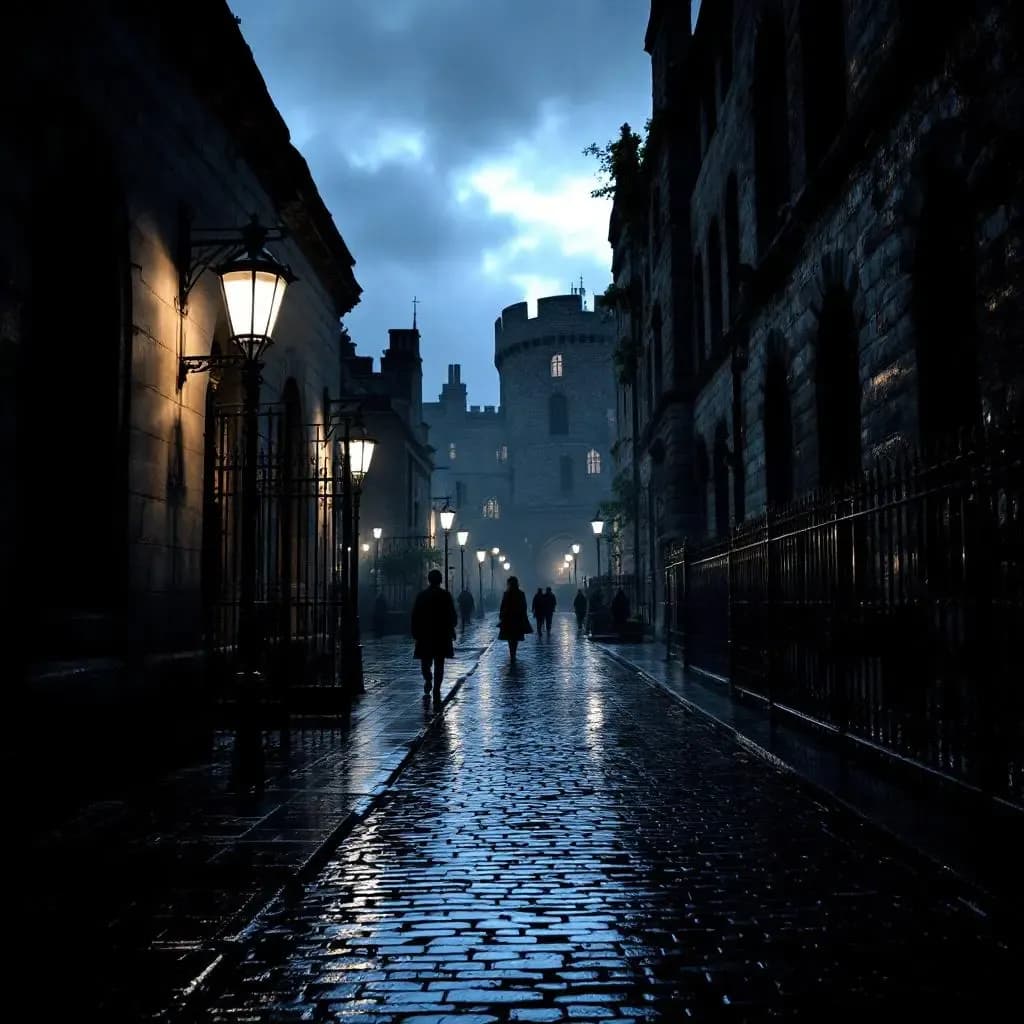
A walking tour operating in Dublin city centre takes participants through several centuries of Irish criminal history — from Georgian-era grave robbers and a brazen jewel theft at Dublin Castle to the gangland violence that shocked the Irish public in the 1990s.
What the Tour Covers
The Dublin True Crime Walking Tour departs from the tree by Starbucks at College Green and ends at either St. Audoen's Park or the Dubh Linn Gardens at Dublin Castle. The route is confirmed to cover topics including the Tiger Kidnappings that terrorised Irish families in the 2000s, the 2009 Bank of Ireland Heist, murders connected to Trinity College, the trade in stolen corpses, and two cases that have become defining moments in Irish criminal history.
The first is the Irish Crown Jewels Heist of 1907, when the Irish Crown Jewels — including a diamond-encrusted star and badge of the Order of St. Patrick — were stolen from a safe inside Dublin Castle. The theft was never solved, and the jewels have never been recovered.
The second is the murder of Veronica Guerin, an investigative journalist shot dead in her car at a red light on the outskirts of Dublin on 26 June 1996. Guerin had spent years exposing the leading figures of the Dublin drugs trade at considerable personal risk, and her assassination prompted the Irish government to establish the Criminal Assets Bureau. Her story remains one of the most significant true crime cases in Irish history.
The tour runs for approximately 90 to 120 minutes and has been rated among the top experiences in Dublin on TripAdvisor, with over 100 verified reviews. It is described as family-friendly but is not recommended for children under 10 or for wheelchair users due to the nature of the route.
For current dates, availability, and pricing, check the listings on Viator's Dublin Crime Tours page, GetYourGuide, or VisitDublin. A 2023 listing placed the price at €15.80 per person, though current rates should be confirmed directly with the operator before booking.
Kilmainham Gaol: The Essential Add-On
No trip through Dublin's dark history is complete without a visit to Kilmainham Gaol, located approximately two kilometres west of the city centre. The prison opened in 1796 as Dublin County Gaol and held both common criminals — including children sentenced to transportation to Australia — and some of the most significant political prisoners in Irish history.
During the 1916 Easter Rising, fourteen of its leaders were executed by firing squad in the Stonebreaker's Yard, a moment that fundamentally altered the course of Irish independence. The prison closed in 1924 and was later restored as a museum. The East Wing, with its Victorian lantern-lit cell block, is particularly atmospheric. The West Wing remains unrestored, giving visitors a rawer sense of the building's original condition.
Kilmainham Gaol is independently operated and is not part of the walking tour described above. It requires separate pre-booking, and tours sell out regularly — advance reservation is strongly advised. Confirm opening hours and ticket availability directly with the museum before your visit.
Planning Your Visit
Dublin is compact and walkable, and combining the city centre crime walking tour with a separate visit to Kilmainham Gaol makes for a coherent day of dark tourism. The walking tour begins in the heart of the city near Trinity College, while Kilmainham sits further west along the Liffey — reachable by bus or a forty-minute walk.
For the walking tour, wear comfortable shoes and dress for Irish weather. The route moves through public streets and historic spaces, and no specialist equipment is needed.
For current schedules, booking options, and tour availability, the Viator listings page for Dublin Crime Tours is a reliable starting point. Additional listings are available through GetYourGuide and the official VisitDublin website.
Dublin's criminal history is not a footnote — it is woven into the city's architecture, its courtrooms, its journalism, and its politics. These tours make that history walkable.