Nordic noir meets historical trauma in Danish thriller 'Blodspor'
Julie Hastrup's crime novel weaves Franco-era atrocities into contemporary Scandinavian detective fiction
Quick Facts
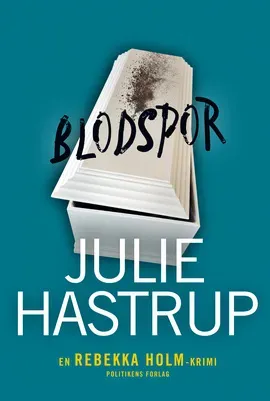
In October 2018, Danish author Julie Hastrup published "Blodspor" (Blood Traces), her seventh novel featuring criminal investigator Rebecca Holm. The work represents a deliberate departure from formulaic Scandinavian crime writing, instead threading together a fictional family murder with one of Europe's most painful historical legacies: Franco's Spain and the regime's systematic theft of children from political prisoners.
The setup appears deceptively conventional—a wealthy family found murdered at their dinner table in Denmark. Yet Hastrup uses this domestic crime scene as a portal into deeper, more unsettling questions about inherited trauma, state violence, and the ghosts that haunt modern European societies. The novel moves fluidly between contemporary Denmark and Spain's post-Civil War period, a tactic that distinguishes it from the formula-heavy crime thrillers dominating Scandinavian publishing.
For international readers unfamiliar with Nordic crime tradition, the appeal of "Blodspor" lies in what it deliberately avoids. Unlike the psychological manipulation and graphic violence characteristic of much commercial Nordic noir—think of works like the "Girl" trilogy's international phenomenon—Hastrup prioritizes literary restraint. This restraint, paradoxically, deepens the psychological impact. The author weaves moral complexity through her protagonists rather than sensationalizing their investigations.
The Franco regime's crimes form the novel's historical backbone. Between 1939 and the 1970s, Franco's government systematized the abduction of infants born to Republican prisoners, placing them with fascist families as part of an ideological "cleansing" program. Thousands were affected; many families only discovered the truth decades later. Hastrup's incorporation of this material into a contemporary mystery demonstrates how crime fiction can serve as a vehicle for historical reckoning—something Scandinavian literature has long excelled at, given the region's own complicated 20th-century history.