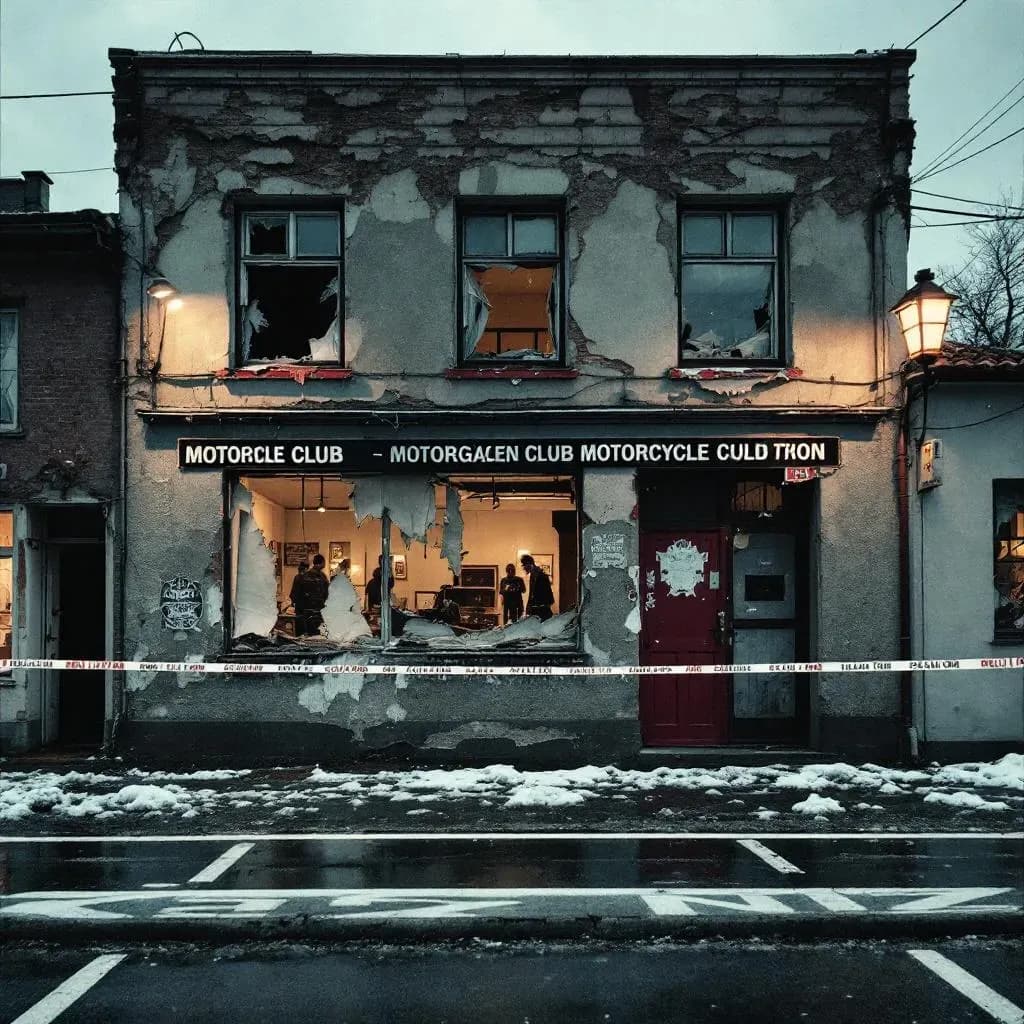
Two of the world's most notorious motorcycle clubs, Hells Angels MC and Bandidos MC, fought a bloody war on Scandinavian soil between 1994 and 1997. The conflict claimed 11 lives, resulted in 96 registered shooting incidents, and culminated in the use of military weapons on civilian territory. The Great Nordic Biker War became a defining moment in Danish legal history and laid the foundation for modern gang legislation.
The War's Escalation
The conflict between the two motorcycle clubs had international roots but produced particularly fatal consequences in Scandinavia. Denmark was hit hard by the violence with explosions in Dragør, Hellerup, Horsens, and Christiania. Bombings became the clubs' preferred weapon in the territorial battle, and the civilian population was increasingly affected by the consequences.
The escalation step that shocked both authorities and the public came in March 1996, when Bandidos members fired an anti-tank missile at Hells Angels' headquarters in Hamar, Norway. The weapon, normally reserved for military conflicts, marked an unprecedented level of violence in what was officially considered a civil society.
The most tragic incident occurred in Stenløse, where Hells Angels detonated a bomb at Bandidos' clubhouse. The explosion killed an innocent woman and illustrated the fatal flaw in the clubs' logic: the violence affected not only rival members but also random citizens.
Society's Response
The escalating violence forced Danish authorities to act decisively. Municipalities across the country began refusing to rent premises to biker clubs, effectively limiting their physical presence. Police received expanded powers to intervene against organized crime, including increased opportunities for surveillance and searches.
The most significant measure came in 1996 with the adoption of the Biker Ban Law. The legislation gave authorities legal grounds to prohibit bikers' presence and gatherings at specific locations. This was controversial as it raised fundamental questions about freedom of assembly and the state's right to limit citizens' freedom of movement based on group affiliation.
The legislation was met with criticism from legal experts who warned about potential violations of fundamental rights. Nevertheless, security policy considerations prevailed over civil liberties concerns in a population shaken by images of destroyed buildings and killed people.
The Peace Agreement and Aftermath
In 1997, Hells Angels and Bandidos entered into a peace agreement that formally ended the open warfare. The three years of conflict had cost 11 lives in Scandinavia, created fear in local communities, and demonstrated biker groups' capacity to threaten public order with military precision.
But even after the peace agreement, the reverberations continued. The conflict had fundamentally changed perceptions of motorcycle clubs and their role in society. Where they were previously often regarded as subcultural groups with criminal activity on the periphery, they were now recognized as organized criminal networks with the capacity to threaten society's fundamental security.
What Did This Case Change?
The Great Nordic Biker War became the template for Danish criminal policy in the following decades. The Biker Ban Law of 1996 established precedent for state intervention against organized criminal groups based on their collective threat rather than individual crimes.
In the 2000s, the principles from the biker war were reused and expanded in the so-called gang packages. Visitation zones, where police can conduct routine body searches without concrete suspicion, were directly derived from experiences from the 1990s biker conflicts. The concept of banning specific groups from accessing certain geographic areas found its legal legitimacy in the biker law.
The case also demonstrated the necessity of international police cooperation. As the conflict encompassed Norway, Sweden, and Denmark, Nordic coordination became crucial. This cooperation was later formalized and expanded to include a wide range of cross-border crime.
Legally, the case raised fundamental dilemmas still debated today: How far can the state go in limiting individual rights for the sake of collective security? Can membership in an organization itself justify rights restrictions? These questions, which first arose during the biker war, remain central to the debate about gang crime.
The Great Nordic Biker War proved that organized crime can escalate to a level where civil societies must respond with legislative measures. It created the legal and policing foundation that Denmark still builds its gang policy on, and set precedent for how Western democracies can balance security and freedom when confronting organized violence.