The Danish Underworld
Quick Facts
Chronicle's journey through 80 years of Danish crime
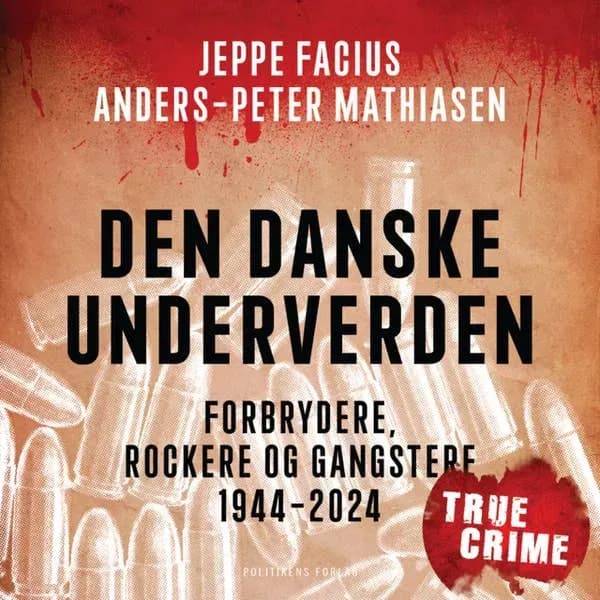
In a shadowy part of Denmark, where the dark past flirts with today's unsolved mysteries, 'Den danske underverden: En krønike om kriminalitet 1944-2024' presents an in-depth analysis of the country's criminal evolution. This work, created by the four-time Cavling Award-winning journalists Anders-Peter Mathiasen and Jeppe Facius, was published in 2024. It takes listeners and readers through 80 years of burgeoning corruption, from the black markets of the occupation period to modern organized networks. Available as both an e-book and audiobook, and published by Politikens Forlag, it captures attention on platforms like Mofibo and Ereolen, while illuminating the complex interweavings of crime's grip on Danish society.
Extensive research behind criminal networks
The work impresses with its extensive research and methodical approach to themes such as corruption and gang crime. In a time where the organization of crime has evolved from the Spider Affair and the biker influx to today's internationalized networks, Mathiasen and Facius manage to contextualize even the most spectacular cases within a historical framework. Down-to-earth descriptions are combined with sharp analytical insights, where both the sound design in the auditory version and the factual text in the e-book shine through. Still, the work faces criticism, especially in its discussion of Loyal to Familia and their influence after the ban; some claim that the book sometimes unnecessarily elevates their role. Despite this, the book succeeds in offering a rare balance between sensation and insight, both fascinating and provoking.
The work's cultural significance and documentary depth
'Den danske underverden' stands as an important cultural documentation, adding to the array of nuanced crime studies in Denmark. This chronicle distinguishes itself by creating a multifaceted understanding that goes beyond the typical sensationalist view, solidly placing itself in both academic circles and the broader public discussion. The combination of archival images and revealing police interrogations, presented in its appendix, enhances the work's depth and makes it an invaluable resource for students and a captivating narrative for the general readership. It reminds us that beneath the world's surface, stories await that require both courage and insight to fully comprehend. In the work, one is confronted with the persistent shadows of crime in cities like Copenhagen, and how these stories have shaped our understanding of organized crime in Denmark.