True crime news logo
  • News

Sign up for our newsletter and get the latest stories

Never miss the latest true crime news, reviews and top lists — plus new podcasts, series, films and books.

You can unsubscribe with one click from any email.

True crime news logo

The international true crime destination. Cases, documentaries, podcasts and travel routes.

© 2026 truecrime.news. All rights reserved.

Blood Trail renews excitement and depth in the true crime genre

Nordic noir meets historical trauma in Danish thriller 'Blodspor'

Julie Hastrup's crime novel weaves Franco-era atrocities into contemporary Scandinavian detective fiction

Author
Susanne Sperling
Published
November 7, 2025 at 12:00 PM

Quick Facts

ForfatterJulie Hastrup
ForlagPolitikens Forlag
Udgivet2018
Sider389
GenreFiktion

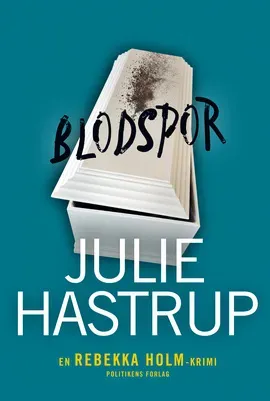
In October 2018, Danish author Julie Hastrup published "Blodspor" (Blood Traces), her seventh novel featuring criminal investigator Rebecca Holm. The work represents a deliberate departure from formulaic Scandinavian crime writing, instead threading together a fictional family murder with one of Europe's most painful historical legacies: Franco's Spain and the regime's systematic theft of children from political prisoners.

The setup appears deceptively conventional—a wealthy family found murdered at their dinner table in Denmark. Yet Hastrup uses this domestic crime scene as a portal into deeper, more unsettling questions about inherited trauma, state violence, and the ghosts that haunt modern European societies. The novel moves fluidly between contemporary Denmark and Spain's post-Civil War period, a tactic that distinguishes it from the formula-heavy crime thrillers dominating Scandinavian publishing.

For international readers unfamiliar with Nordic crime tradition, the appeal of "Blodspor" lies in what it deliberately avoids. Unlike the psychological manipulation and graphic violence characteristic of much commercial Nordic noir—think of works like the "Girl" trilogy's international phenomenon—Hastrup prioritizes literary restraint. This restraint, paradoxically, deepens the psychological impact. The author weaves moral complexity through her protagonists rather than sensationalizing their investigations.

The Franco regime's crimes form the novel's historical backbone. Between 1939 and the 1970s, Franco's government systematized the abduction of infants born to Republican prisoners, placing them with fascist families as part of an ideological "cleansing" program. Thousands were affected; many families only discovered the truth decades later. Hastrup's incorporation of this material into a contemporary mystery demonstrates how crime fiction can serve as a vehicle for historical reckoning—something Scandinavian literature has long excelled at, given the region's own complicated 20th-century history.
The Rebecca Holm series, now seven books deep, has cultivated a devoted readership across Denmark and neighboring Scandinavian markets. "Blodspor" marks a turning point, however. Rather than relying on procedural detail or detective psychology alone, Hastrup constructs a narrative architecture where plot and historical consciousness serve equally. This approach demands more of readers but offers richer rewards—the satisfaction of a solved murder becomes inseparable from grappling with systemic historical injustice.

Scandinavian crime fiction has long held particular weight in international literary markets. The success of authors like Henning Mankell and Jo Nesbø created expectations: dark settings, morally compromised protagonists, intricate procedural detail. "Blodspor" respects these conventions while interrogating them. The dinner table murder might suggest the cozy mystery's aristocratic violence, yet the novel insists on treating even fictional violence with gravity, never allowing sensation to override emotional or historical truth.

For crime fiction enthusiasts beyond Scandinavia, "Blodspor" offers a case study in how the genre can mature without losing momentum. The international success of Scandinavian noir demonstrated that English-language readers craved psychological complexity alongside plot. Hastrup pushes further, suggesting that crime fiction can also accommodate historical consciousness—that a murder mystery can be both a satisfying narrative and a meditation on collective memory.

The novel's publication in 2018 arrived at a moment when European historical reckonings were accelerating. Spain itself was experiencing renewed confrontation with Franco-era crimes; mass graves were being exhumed; families separated by state violence were seeking answers. Hastrup's decision to anchor a contemporary Danish mystery in this ongoing Spanish reckoning feels neither exploitative nor tangential, but rather part of a larger European conversation about how societies process historical trauma through narrative.

"Blodspor" ultimately demonstrates that Nordic noir need not choose between entertainment and substance. Hastrup's achievement lies in proving that psychological depth, historical consciousness, and narrative suspense can reinforce rather than compete with one another—a lesson the crime fiction genre continues to learn.

Read more

True Crime Sweden delves into Nordic mysteries
Podcast

Nordic True Crime Podcasts Explore Scandinavia's Darkest Mysteries

Who Killed Bob? exposes judicial weaknesses
Podcast

The Bob Chappell Case: A Conviction Built on Circumstance

Murder in the North: A podcast that captivates
Podcast

Mord i Nord: Inside Scandinavia's True Crime Podcast

Related Content
True Crime Sweden delves into Nordic mysteries

Nordic True Crime Podcasts Explore Scandinavia's Darkest Mysteries

Who Killed Bob? exposes judicial weaknesses

The Bob Chappell Case: A Conviction Built on Circumstance

Murder in the North: A podcast that captivates

Mord i Nord: Inside Scandinavia's True Crime Podcast

Unresolved digs deep into Denmark's mysterious crime cases

Denmark's Hidden Cases: New Podcast Resurrects Forgotten Crimes

Advertisement
SS

Susanne Sperling

View all stories →
Share this post: