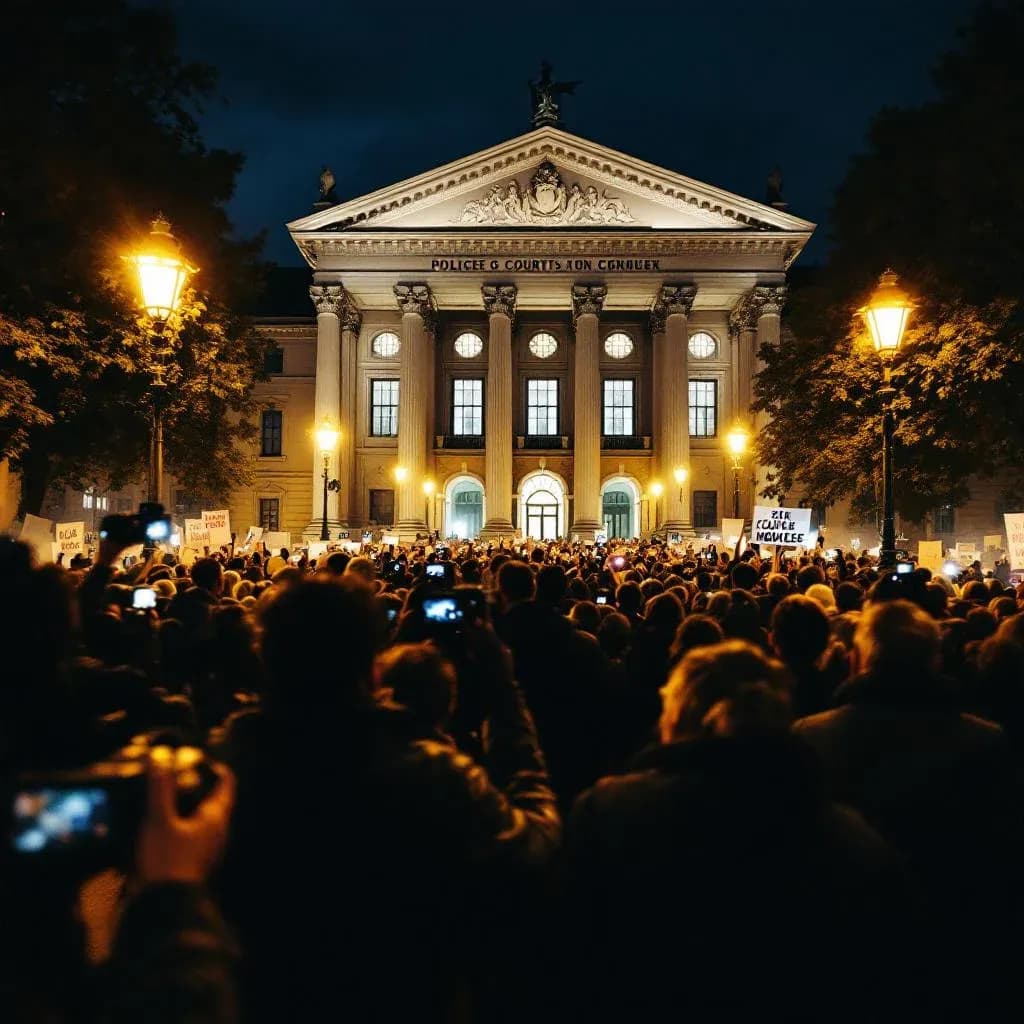
A Historic Conviction in Germany
Lina E., a German student from Leipzig, was sentenced to five years in prison by the Oberlandesgericht Dresden in May 2023 for membership in a left-wing extremist criminal organization. This marks the first time in Germany that anyone has been imprisoned under this legal provision for left-wing extremism—a landmark ruling that has sparked intense debate about the boundaries of politically motivated violence.
According to prosecutors, Lina E. was a member of a group that carried out planned attacks on individuals from right-wing extremist circles between 2018 and 2020. Three co-defendants also received convictions but with shorter sentences.
Organized Attacks and Coordination
The federal prosecutor's office accused the group of orchestrating targeted attacks on right-wing extremists across multiple German cities. Victims suffered severe injuries from weapons including clubs, pepper spray, and brutal violence.
Prosecutors emphasized that these were not spontaneous outbursts but strategically planned operations. The group allegedly communicated through encrypted channels, surveilled targets, and prepared escape routes. According to the defendants, right-wing extremism posed an acute threat that the state failed to adequately address.
Dramatic Courtroom Proceedings
The trial began in September 2022 and lasted several months. It took place under extraordinary security measures, with demonstrations both inside and outside the Dresden courthouse.
Left-leaning groups mobilized internationally to support the defendants, whom they characterized as political prisoners. Defense attorneys argued their clients had merely defended themselves against neo-Nazis who posed a genuine threat to democracy. They contended that applying this statute—originally designed for organized crime and terrorism—was disproportionate in this context.
The prosecution insisted that vigilantism and self-help justice can never be tolerated, regardless of political motivation. The victims had suffered potentially life-threatening injuries, and the group's organizational structure demonstrated criminal intent.
Verdict and Fierce Criticism
In May 2023, the court delivered its judgment: Lina E. received five years, three co-defendants received shorter sentences, and one was acquitted. The court found it proven that a criminal organization existed and that the defendants participated in violent attacks.
The verdict triggered massive protests. Solidarity campaigns intensified, and demonstrations erupted across German cities. Critics accused the state of applying double standards—prosecuting left-wing violence more aggressively than right-wing violence. Supporters of the conviction saw it as an important signal that the rule of law pursues violence from all parts of the political spectrum.
A Nation Divided
The case became a touchstone for German society. The question of whether violence against right-wing extremists should be evaluated as self-defense or terrorism divided antifascist movements and political camps. Parts of the left celebrate the convicted as heroes in the fight against Nazism, while others warn against romanticizing political violence.
The case raises fundamental questions: How does a democracy address extremism? Is this statute the right tool against left-wing militant action? Where is the line between legitimate antifascist resistance and criminal vigilantism?
The debate continues and reveals deep divisions in society's assessment of political violence. The conviction of Lina E. remains a landmark case that will shape legal and public discourse on left-wing extremism for years to come.