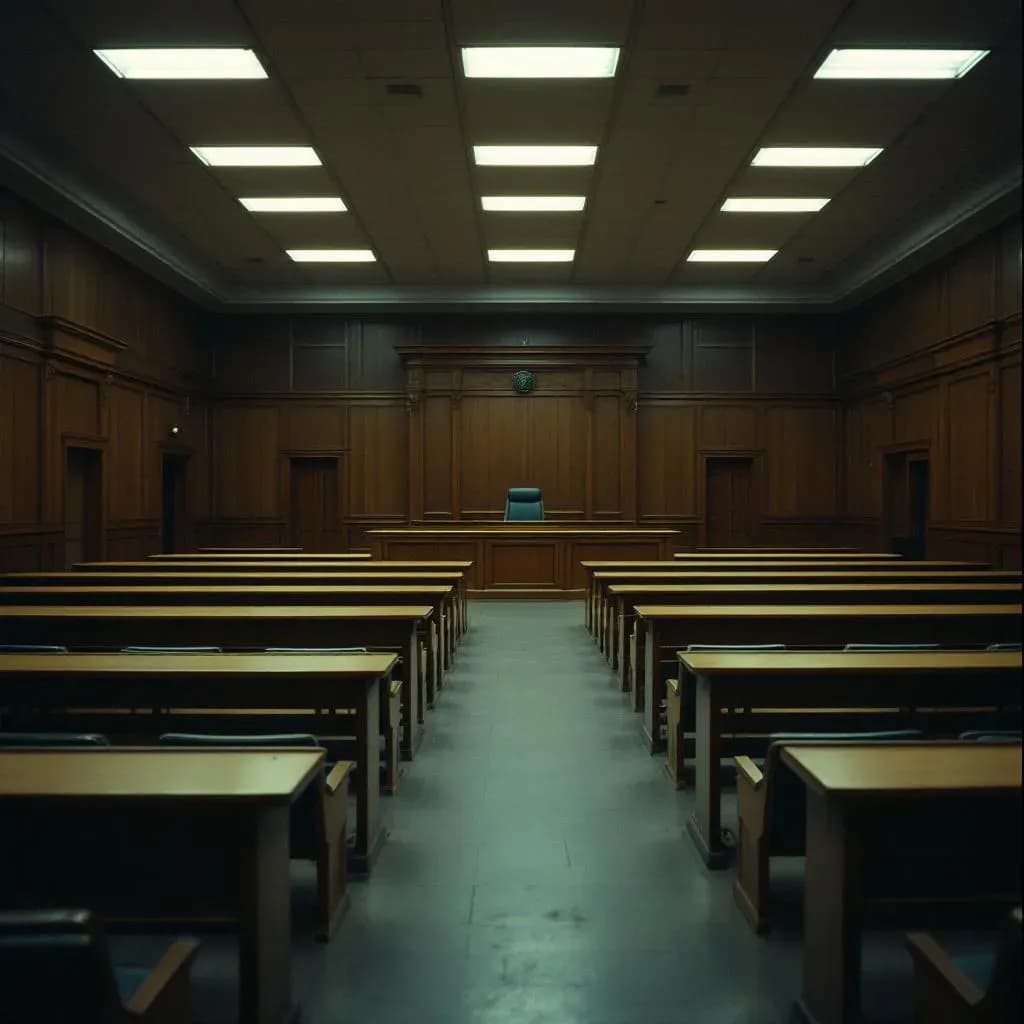
Marianne Bachmeier entered the courtroom at Landgericht Lübeck on March 20, 1981, with a loaded Beretta pistol in her bag. In front of judges, lawyers and spectators, she drew the weapon and fired six shots at Klaus Wolfgang Grabowski — the man who had raped and strangled her seven-year-old daughter Anna Felchle. Two bullets hit Grabowski fatally in the heart and lungs. The mother became judge in her own case.
The Murder of Anna Felchle
On February 5, 1980, seven-year-old Anna disappeared from her hometown in Hessen. Her body was found in Langenholzhausen near Kassel. Klaus Grabowski, a previously convicted sex offender, confessed to the rape and murder of the child. The case shocked the region and devastated the mother Marianne Christa Johanna Bachmeier. While Grabowski prepared for trial, Bachmeier planned her own form of justice. Public outrage over the child murder was massive, but the justice system followed its prescribed course.
Six Shots in the Courtroom
During Grabowski's trial on March 20, 1981, Marianne Bachmeier sat discreetly among the spectators at first. Then she stood up, drew her pistol and fired at the defendant. The scene shocked everyone present. Grabowski died in the courtroom. Bachmeier was immediately arrested. Her act triggered an unprecedented public debate: Was she a desperate mother who saw no other way out — or a cold-blooded murderer who disregarded the justice system?
The prosecution later demanded eight years in prison for murder. They argued that Bachmeier had planned and deliberately executed the act. The defense, however, emphasized the emotional state of exception of a grieving mother who had acted in affect.
The Verdict and Society's Division
On March 2, 1983, Landgericht Lübeck convicted Marianne Bachmeier of manslaughter and sentenced her to six years in prison. The presiding judge Günther Schmidt justified the verdict with the words: "The defendant acted in affect, triggered by the loss of her daughter." The court recognized that Bachmeier was under extreme emotional pressure, but rejected the murder charge.
The decision polarized Germany. Many people sympathized with Bachmeier and saw her as a heroine who stood up for her child. Others warned against the dangers of vigilante justice and emphasized that no one has the right to carry out sentences on their own. The case led to intense discussions about victims' rights, grief processing and the limits of the justice system.
Bachmeier served her sentence in prison in Lübeck and later in Bethel. After approximately three years, on February 2, 1985, she was released on parole — not due to a pardon, but following a positive behavior report.
Life After Prison and Death
After her release, Marianne Bachmeier tried to live a normal life, but the shadow of her act followed her to the end. She lived in seclusion in Lübeck and largely avoided the public eye. On September 17, 1996, she died at age 46 of cancer — liver and pancreatic cancer — at a clinic in Lübeck.
The case of Marianne Bachmeier remains to this day an example of the difficult balance between human compassion and rule-of-law principles. It demonstrates the limits of the justice system and the desperation of parents who have lost their children through violent crimes. The question of whether her act was understandable or reprehensible is answered differently — and that makes the case one of the most defining in German criminal history.