The Baltic's Explosive Night
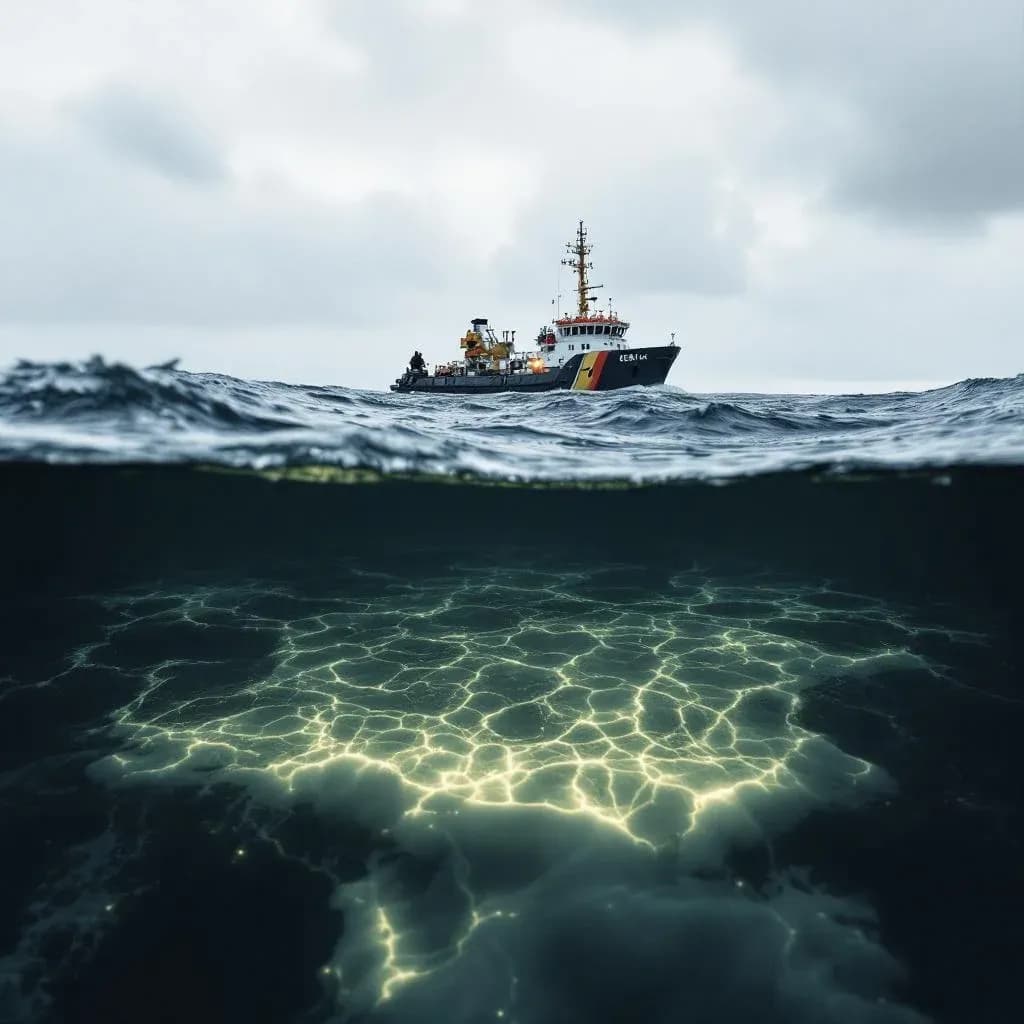
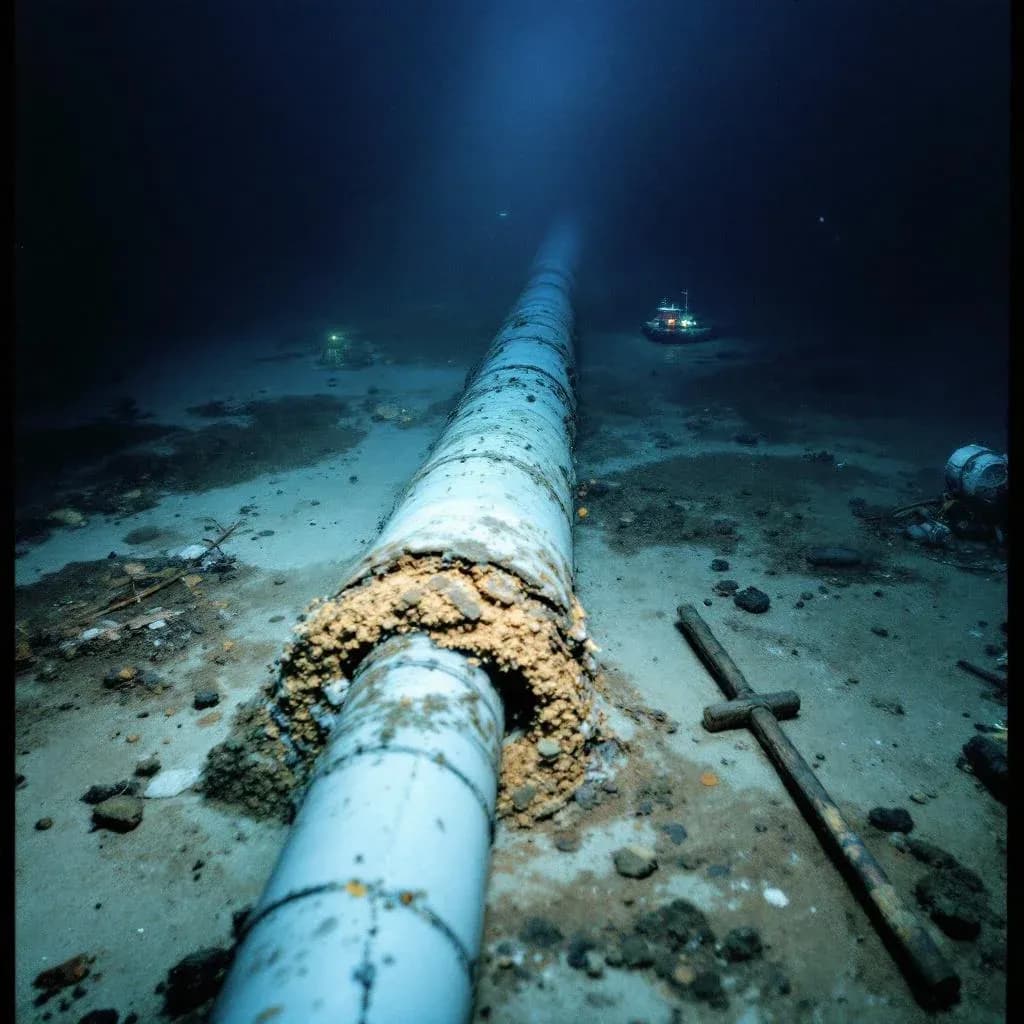
Four underwater explosions rocked the Baltic Sea on September 26, 2022, near the Danish island of Bornholm, destroying the Nord Stream 1 and Nord Stream 2 gas pipelines. Denmark's Seismic Institute recorded the blasts at 02:03 and 19:03 with a magnitude of 2.3 on the Richter scale. The leaks occurred in Danish and Swedish economic zones approximately 50 miles southeast of Bornholm. Each of the four damaged pipeline sections sustained ruptures measuring between 200 and 800 meters in length—an unprecedented level of destruction.
The explosions released an estimated 500 million cubic meters of methane, representing humanity's largest sabotage-related methane release. Danish authorities documented massive gas bubbles on the sea surface visible for days. The sabotage occurred amid Russia's war on Ukraine and was immediately classified as deliberate infrastructure sabotage.
Parallel Investigations Across Three Nations
Sweden, Denmark, and Germany launched comprehensive investigations immediately following the explosions. The Swedish prosecution authority opened a case on September 27, 2022, for serious sabotage. The Swedish Armed Forces Signals Intelligence Agency (FRA) and coast guard collected evidence from the seafloor, including explosive residue and metal fragments. After 16 months, Sweden closed the investigation on February 8, 2024, citing lack of Swedish jurisdiction and inability to identify suspects.
Denmark followed two days later. Danish Police and the Danish Police Intelligence Service (PET) had conducted parallel investigations without results. On February 6, 2024, the case was closed due to insufficient suspicion against any identified persons.
Only Germany continues investigating. The Federal Prosecutor's Office in Karlsruhe took over the case and classified it as a state security matter. German investigators reached a striking conclusion: they identified a pro-Ukrainian group as the primary suspects.
The Trail Leads to the Yacht "Andromeda"
In August 2024, German prosecutors released crucial details. Investigators had identified the yacht "Andromeda," rented in Rostock in September 2022. The vessel allegedly carried six to ten people—predominantly Ukrainian nationals and one Russian. Forensic examination of the boat revealed traces of HMX, a military-grade high-explosive.
The operation was allegedly privately financed with an estimated cost of approximately 300,000 euros. In June 2024, German prosecutors issued an international arrest warrant for Volodymyr Z., a Ukrainian national born in 1992. Two additional suspects were identified: Wojciech K. and J.S., both Polish nationals. None have been arrested to date.
According to German claims, Ukrainian authorities are not fully cooperating with the investigation. The German government emphasizes there are no signs of official Ukrainian state involvement—the group acted independently. This narrative remains disputed.
Competing Theories and Geopolitical Tensions
Beyond the German investigative trail, alternative theories circulate. American journalist Seymour Hersh published an article in February 2023 alleging the United States destroyed the pipelines on orders from President Joe Biden. The U.S. government rejected this as "fiction." The White House declared on February 8, 2023, that Hersh's claims were "completely false."
Russian officials have repeatedly accused Western states, particularly Britain and the United States. NATO Secretary General Jens Stoltenberg called the explosions "probably Russian motivated" on September 29, 2022, without presenting concrete evidence. The European Commission cautiously referred to "sabotage by unknown actors."
Modern hybrid warfare significantly complicates investigation. State actors employ covert operations, private military contractors, and proxy groups to conduct attacks without direct accountability. The Nord Stream case exemplifies how difficult it is for the rule of law to investigate under such conditions.
Where the Case Stands Now
Nearly four years after the explosions, the case remains unsolved. The German investigation continues without convictions. Volodymyr Z. has disappeared, and Ukraine refuses to extradite him. The damaged pipelines remain on the seafloor—repairs have never begun. Nord Stream 2 never became operational, and Russia shut down Nord Stream 1 shortly before the sabotage.
The German prosecution office noted in January 2026 that the investigation continues without new breakthroughs. Legal experts believe the case may never be fully resolved for political reasons. The pipeline destruction marks a turning point in European energy policy and demonstrates the vulnerability of critical infrastructure during hybrid conflicts].