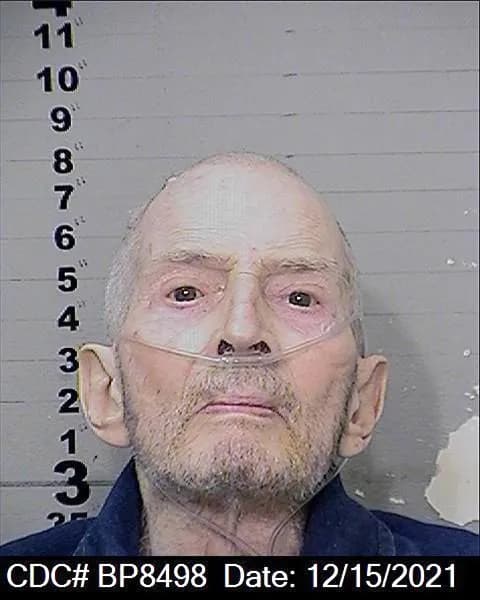
On the morning of 7 August 1985, Jeremy Nevill Bamber made a call to Essex police that would set in motion one of Britain's most enduring murder cases. The then-24-year-old reported that his adoptive sister, Sheila Caffell, had gone on a shooting rampage at the family home, killing their parents and her own twin sons before turning the gun on herself.
It was a story that would unravel under scrutiny. Within weeks, Bamber himself stood accused. Today, 39 years later, he remains one of the UK's longest-serving prisoners, locked away under a whole life tariff with no possibility of parole.
**The Victims and the Crime**
The victims of that August morning were five in total: Bamber's adoptive parents, Nevill and June Bamber; his sister Sheila Caffell; and Sheila's six-year-old twin sons, Nicholas and Daniel. All died from gunshot wounds at the Essex farmhouse.
Bamber's initial account—that his mentally unstable sister had committed the murders before taking her own life—seemed plausible enough at first. Sheila had a documented history of psychiatric problems. But as police investigated, inconsistencies in Bamber's story began to emerge, and suspicion shifted toward him.
**The Investigation and Arrest**
On 29 September 1985, Bamber was arrested and charged with five counts of murder. The prosecution's case relied heavily on testimony from his then-girlfriend, Julie Mugford, who claimed he had made murderous threats against his family and had confessed his involvement to her directly. Evidence also emerged that Bamber had admitted to committing a burglary at the family's caravan site business—Osea Road Camp Sites Ltd. in Maldon—just five months before the murders, a theft undertaken with Mugford's help.
The weapon used was a firearm fitted with a silencer, a detail that would become crucial to the prosecution's narrative.
**Trial and Conviction**
Bamber's trial began on 14 October 1986 at Chelmsford Crown Court. The jury found him guilty on all counts by a majority of 10-2. Judge Mr Justice Drake handed down five life sentences, with a minimum term of 25 years. In his remarks from the bench, the judge described Bamber as "warped and evil beyond belief" and expressed grave doubts about whether he could ever be safely released—a assessment that would ultimately lead to a whole life tariff.
**Appeals and Lingering Doubt**
In the decades that followed, Bamber mounted repeated appeals, each unsuccessful. A significant moment came in 2001 when the Criminal Cases Review Commission (CCRC) referred the case to the Court of Appeal based on new DNA evidence found on the silencer—evidence that did not match Sheila Caffell, which had been central to the defence argument that she was the shooter. However, in December 2002, the Court of Appeal upheld the conviction. Bamber also lost a High Court claim seeking £1.27 million from his grandmother's will.
Life in prison has not been without incident. In 2004, Bamber was attacked by a fellow prisoner wielding a knife, an assault that left him requiring between 20 and 28 stitches. He successfully defended himself in a second knife attack using a broken bottle.
While Bamber maintains his innocence and continues to pursue legal avenues, his extended family remains convinced of his guilt. The case endures as a landmark in British criminal justice—a reminder of how thoroughly a family can be torn apart, and how questions about justice can linger even after decades of imprisonment.
**Sources**
https://www.crimeandinvestigation.co.uk/crime-files/jeremy-bamber
https://ccrc.gov.uk/decision/bamber-jeremy/
https://en.wikipedia.org/wiki/Jeremy_Bamber
https://www.youtube.com/watch?v=1R8z-bTuuGc
https://www.youtube.com/watch?v=tCgZx-XAxso