Sanford (2012): Martin killing starts national debate
On a rainy evening in Sanford, Florida, February 26, 2012, a tragedy unfolded that ignited a national debate in the USA about race, gun laws, and the right to self-defense. George Zimmerman, a 28-year-old volunteer neighborhood watchman, shot and killed Trayvon Martin, a 17-year-old unarmed Black teenager. The subsequent 2013 trial of Zimmerman evolved into a high-profile case that became more than just a legal verdict; it served as a catalyst for profound societal reflection on justice and systemic racism in the USA.
The fatal evening: Zimmerman's call, pursuit, shooting
On that fateful evening, at 7:09 PM, George Zimmerman contacted the police non-emergency line to report what he described as a "suspicious" person in The Retreat at Twin Lakes residential complex in Sanford. In police audio recordings, Zimmerman described Trayvon Martin as "someone up to no good," noting that Martin was wearing a hoodie – an item of clothing that later became a symbol in the case. Despite clear police instructions not to approach or confront the individual, Zimmerman left his vehicle and followed Martin. Just minutes later, at 7:16 PM, neighbors heard a gunshot. Police arrived at the scene five minutes later.
Self-defense or murder?: Zimmerman's claim, police release
George Zimmerman claimed that Trayvon Martin had attacked him, punched him, and slammed his head against the sidewalk, forcing him, according to Zimmerman, to use deadly force in self-defense. The autopsy report indicated that Martin's only injury was a single gunshot wound to the chest, fired at close range. Zimmerman was briefly detained but released the same evening, as Sanford police at the time found insufficient evidence to refute his claim of self-defense. Later, following significant public pressure, the state attorney's office, led by special prosecutor Angela Corey, charged Zimmerman with second-degree murder.
The trial (2013): Conflicting tales of struggle, voices
The highly publicized trial, which ran from June to July 2013, was marked by intense witness testimonies and the presentation of technical evidence. A key witness, neighbor Jayne Surdyka, testified that she heard two distinct voices: a "dominant" and angry voice, and a "weaker" voice that seemed to be crying for help. Her observation of a person in dark clothing on top of another person on the ground became an important element in the defense's argument of a physical confrontation. George Zimmerman's uncle, Jorge Meza, identified his nephew's voice on one of the crucial 911 calls played in court. In contrast, kickboxing trainer Adam Pollock described Zimmerman as physically unimposing and overweight, casting doubt on his ability to pose a threat.
Technical evidence: Blood, GPS data, calls in scrutiny
The court was also presented with various pieces of technical evidence, including George Zimmerman's bloodstained clothing and detailed cell phone logs from both individuals. Specifically, GPS data from an electronic ankle monitor Zimmerman wore as part of his bail conditions showed his movements in the residential area leading up to the incident. An enhanced video recording from the Sanford police station documented visible injuries to Zimmerman's back head and nose. Meanwhile, Trayvon Martin's phone log confirmed he was on a call with his girlfriend immediately before the fatal shooting.
Florida's "Stand Your Ground" law and racial profiling
Defense attorney Mark O'Mara largely based his defense on Florida's controversial "Stand Your Ground" law. O'Mara argued extensively that this law protected George Zimmerman's right to use deadly force without an obligation to retreat if he reasonably feared for his life. Conversely, the attorney for Trayvon Martin's family, Benjamin Crump, and the state prosecutor raised the issue of racial profiling, questioning whether a Black teenager like Martin was automatically deemed suspicious solely due to his skin color and attire.
Zimmerman's acquittal: Verdict that led to protests
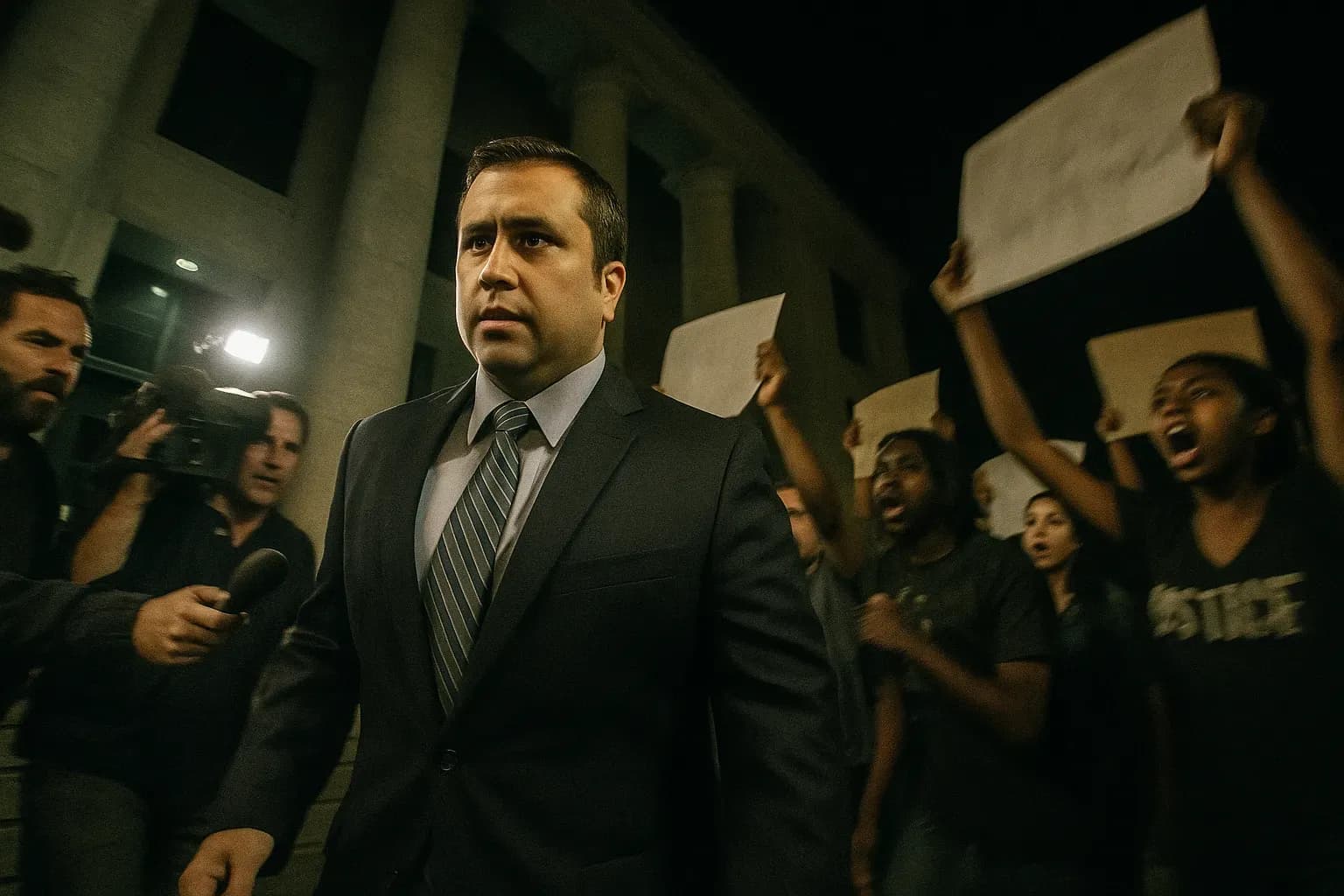
On July 13, 2013, at 10:00 PM, the jury delivered its verdict: George Zimmerman was acquitted of murder and all other charges. Zimmerman walked out of the Sanford courthouse a free man, but the acquittal sent shockwaves across the USA, triggering massive public reactions. Demonstrations erupted in over 100 cities. The tragedy in Ferguson, Missouri, where unarmed Black teenager Michael Brown was killed by police the following year, was directly linked by many to the frustration over the Zimmerman verdict and the perceived lack of justice.
#BlackLivesMatter rises: Obama and defense law changes
In direct response to George Zimmerman's acquittal, the hashtag #BlackLivesMatter was created by activists Alicia Garza, Patrisse Cullors, and Opal Tometi. This hashtag quickly grew into a globally recognized symbol of the fight against racial profiling and police violence targeting Black individuals. Then-President Barack Obama commented on the case with the poignant words, "If I had a son, he'd look like Trayvon," underscoring the deep symbolic significance the killing of Trayvon Martin held for many Americans. The case also prompted several US states, including Ohio and Missouri, to re-evaluate and, in some instances, amend their "Stand Your Ground" laws. A Yale study later highlighted how "motivated reasoning" influenced public perception of the case, with both supporters and critics of Zimmerman potentially interpreting evidence selectively to affirm their pre-existing beliefs about self-defense and justice.
Media and legal reform (2017): Florida's polarization
Intense 24-hour news coverage, particularly from channels like CNN, which live-streamed significant portions of the trial, coupled with the explosive spread of information and opinions on social media, markedly contributed to the polarization surrounding the George Zimmerman case. This type of media engagement set new precedents for how high-profile true crime cases were disseminated to the public. Simultaneously, reputable newspapers such as The New York Times delved into the ethical dilemmas and legal implications, especially concerning Florida's "Stand Your Ground" law. As a result of the extensive debate, Florida's "Stand Your Ground" law was amended in 2017. This change shifted the burden of proof, requiring the prosecution to prove that self-defense was *not* justified, rather than the defense having to prove it was. This amendment in Florida set a precedent, inspiring similar legislative adjustments in other states like Texas and Georgia.
Aftermath: Zimmerman case reflects America's challenges
The George Zimmerman case remains a significant cultural and legal touchstone in recent American jurisprudence and is regarded as a pivotal high-profile case. Although the Florida justice system acquitted Zimmerman of murdering Trayvon Martin, the verdict unleashed a widespread wave of social activism and led to concrete legislative reforms concerning self-defense and "Stand Your Ground" laws. This Sanford case sharply illuminates the complex and often painful interplay between race, perceptions of justice, and the persistent debate on gun control—issues that continue to be central challenges in American society.
Trayvon as a symbol: Justice debate, lasting impact
Today, Trayvon Martin's name is inextricably linked to the fight against racial profiling and has become a potent symbol for this movement. Concurrently, George Zimmerman's acquittal continues to be intensely debated in legal circles, often cited as an example of the complex and sometimes unpredictable consequences of "Stand Your Ground" legislation in cases involving self-defense and alleged violence. For many, the trial left a lingering sense that justice had not been fully served, and for some, the acquittal raised questions bordering on a perception of a miscarriage of justice, even though this was not the legal outcome. When analyzing this high-profile case today, it is crucial to understand it not merely as an isolated trial in Florida but as a manifestation of deeper, systemic challenges within the United States. From the intense testimonies in the Sanford courtroom to the widespread street demonstrations across the nation, the George Zimmerman/Trayvon Martin case tragically illustrates how a single incident—a fatal shooting involving a teenager—can act as a powerful catalyst for far-reaching societal change, a process that is still unfolding.
Follow KrimiNyt for more in-depth cases on justice, controversial verdicts, and cases that have shaped society.