True crime news logo
  • News
True crime news logo

The international true crime destination. Cases, documentaries, podcasts and travel routes.

© 2026 truecrime.news. All rights reserved.

34-årig mand sigtet for drab efter ligfund i Aarhus-lejlighed

Danish Man Charged With Murder After Body Found in Aarhus Apartment

Suspect Remains in Custody as East Jutland Police Investigate Under Sealed Court Proceedings

By
Susanne Sperling
Published
April 7, 2026 at 07:03 PM

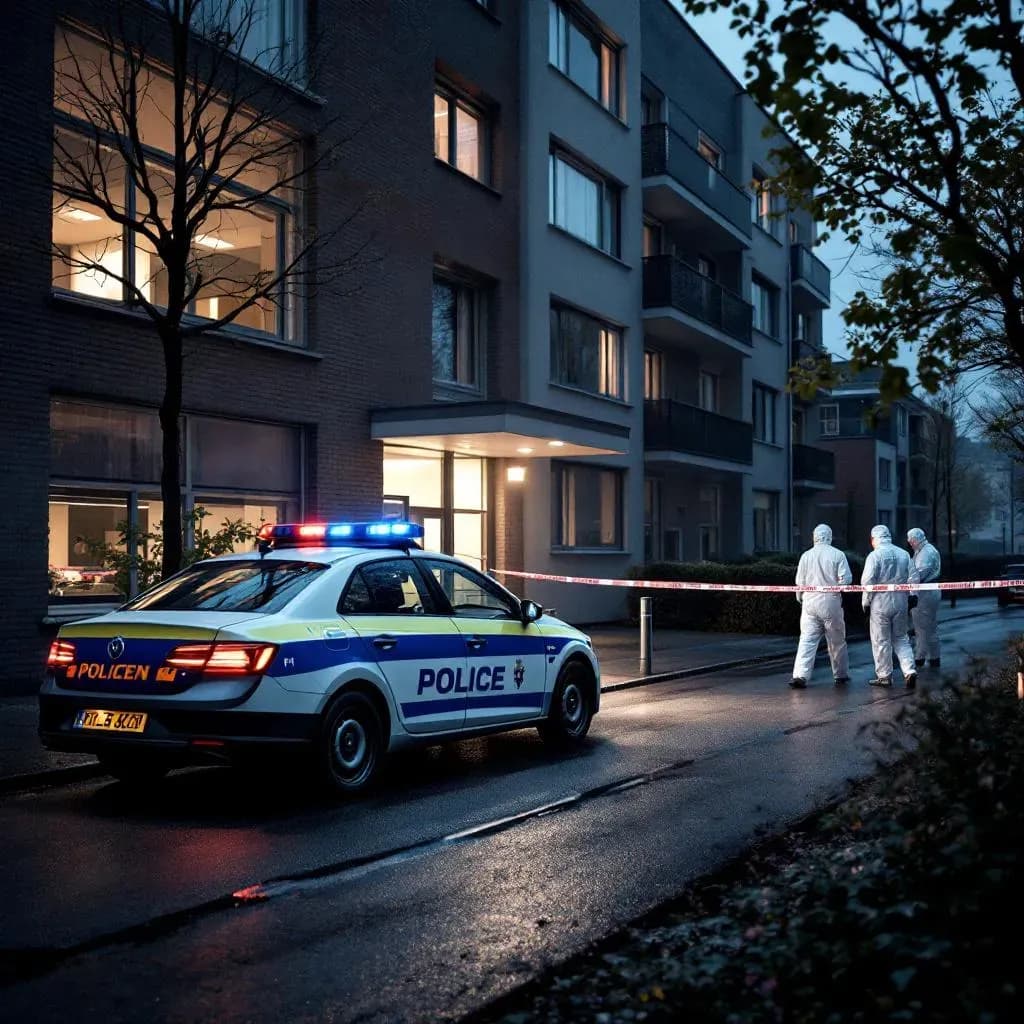
A 34-year-old man is facing a murder charge following the discovery of a body in a residential apartment in Aarhus, Denmark's second-largest city. East Jutland Police announced the development at a press conference, though details about the case remain tightly restricted under Danish law.

The suspect has been remanded in custody pending trial, a standard procedure in Scandinavian criminal justice systems. Unlike many English-speaking countries where bail hearings and preliminary charges are often matters of public record, Denmark employs a closed-court system for initial proceedings designed to protect the integrity of ongoing investigations.

The identity of the deceased has not been released by authorities. Police have withheld standard biographical information including the victim's age, gender, and name—details that would typically be disclosed in comparable cases in the United States, the United Kingdom, or Australia. This approach reflects broader Nordic criminal justice philosophy, which prioritizes investigative confidentiality over public disclosure during early stages of prosecution.

East Jutland Police, which covers the Aarhus region, has not yet indicated whether specialized units have been deployed to assist with the investigation. Denmark's National Investigation Centre (NEC)—a specialized division comparable to elite investigative units in other nations—has not been mentioned as being involved, though such agencies are often called in for complex or high-profile cases.

The closed-court ruling ("dørlukning" in Danish) means that journalists and the public are systematically excluded from court proceedings and bail hearings. Prosecutors and defense attorneys are typically prohibited from discussing case details publicly, and judges do not issue detailed written decisions that explain the evidence or reasoning behind custody decisions. This secrecy can extend for months in serious cases.


For international observers, Denmark's approach represents a stark contrast to common law jurisdictions. While American courts routinely hold public preliminary hearings where probable cause is established, and UK courts livestream some proceedings, Scandinavian countries maintain strict information controls. These policies are justified by advocates as necessary to prevent media influence on juries and to protect witnesses and suspects' privacy rights during investigation.

Aarhus, located in eastern Jutland, is Denmark's second city with roughly 340,000 residents. Like other major Nordic cities, it has experienced relatively low violent crime rates compared to international standards, though serious offenses do occur. The city has been the focus of several high-profile criminal cases in recent years.

The investigation is ongoing. Further developments are expected as prosecutors build their case, though Danish media restrictions mean information will likely remain limited. Next developments typically include a preliminary trial date, which may also be held under sealed proceedings.

Under Danish law, the suspect is entitled to legal representation and the presumption of innocence. The charge of murder ("drab") carries a maximum sentence of life imprisonment, with a typical range of 12-16 years for cases without aggravating circumstances.

This case exemplifies the fundamental differences between Nordic transparency standards and those of English-language criminal justice systems, where public access to court information and proceedings is considered essential to accountability and the rule of law.

Read more

Clan-Kriminalität in Deutschland: Strukturen und Ermittlungen
Post

Clan Criminality in Denmark: Structures and Investigation

Vienna Killing: Unterweger-Serie 2025 – Faktencheck
Post

Fake Documentary: Jack Unterweger 2025 Series Doesn't Exist

Petra Fehre Inka-Pfad Mord
Case

Petra Fehre Inka-Pfad Mord

Related Content
Clan-Kriminalität in Deutschland: Strukturen und Ermittlungen

Clan Criminality in Denmark: Structures and Investigation

Vienna Killing: Unterweger-Serie 2025 – Faktencheck

Fake Documentary: Jack Unterweger 2025 Series Doesn't Exist

Petra Fehre Inka-Pfad Mord

Petra Fehre Inka-Pfad Mord

Mord auf dem Inka-Pfad: ARD-Serie rekonstruiert Fall Petra Fehre

Murder on the Inca Trail: German TV Exposes Husband's Crime

Advertisement
SS

Susanne Sperling

Share this post:
34-årig mand sigtet for drab efter ligfund i Aarhus-lejlighed

Danish Man Charged With Murder After Body Found in Aarhus Apartment

Suspect Remains in Custody as East Jutland Police Investigate Under Sealed Court Proceedings

By
Susanne Sperling
Published
April 7, 2026 at 07:03 PM

A 34-year-old man is facing a murder charge following the discovery of a body in a residential apartment in Aarhus, Denmark's second-largest city. East Jutland Police announced the development at a press conference, though details about the case remain tightly restricted under Danish law.

The suspect has been remanded in custody pending trial, a standard procedure in Scandinavian criminal justice systems. Unlike many English-speaking countries where bail hearings and preliminary charges are often matters of public record, Denmark employs a closed-court system for initial proceedings designed to protect the integrity of ongoing investigations.

The identity of the deceased has not been released by authorities. Police have withheld standard biographical information including the victim's age, gender, and name—details that would typically be disclosed in comparable cases in the United States, the United Kingdom, or Australia. This approach reflects broader Nordic criminal justice philosophy, which prioritizes investigative confidentiality over public disclosure during early stages of prosecution.

East Jutland Police, which covers the Aarhus region, has not yet indicated whether specialized units have been deployed to assist with the investigation. Denmark's National Investigation Centre (NEC)—a specialized division comparable to elite investigative units in other nations—has not been mentioned as being involved, though such agencies are often called in for complex or high-profile cases.

The closed-court ruling ("dørlukning" in Danish) means that journalists and the public are systematically excluded from court proceedings and bail hearings. Prosecutors and defense attorneys are typically prohibited from discussing case details publicly, and judges do not issue detailed written decisions that explain the evidence or reasoning behind custody decisions. This secrecy can extend for months in serious cases.

For international observers, Denmark's approach represents a stark contrast to common law jurisdictions. While American courts routinely hold public preliminary hearings where probable cause is established, and UK courts livestream some proceedings, Scandinavian countries maintain strict information controls. These policies are justified by advocates as necessary to prevent media influence on juries and to protect witnesses and suspects' privacy rights during investigation.

Aarhus, located in eastern Jutland, is Denmark's second city with roughly 340,000 residents. Like other major Nordic cities, it has experienced relatively low violent crime rates compared to international standards, though serious offenses do occur. The city has been the focus of several high-profile criminal cases in recent years.

The investigation is ongoing. Further developments are expected as prosecutors build their case, though Danish media restrictions mean information will likely remain limited. Next developments typically include a preliminary trial date, which may also be held under sealed proceedings.

Under Danish law, the suspect is entitled to legal representation and the presumption of innocence. The charge of murder ("drab") carries a maximum sentence of life imprisonment, with a typical range of 12-16 years for cases without aggravating circumstances.

This case exemplifies the fundamental differences between Nordic transparency standards and those of English-language criminal justice systems, where public access to court information and proceedings is considered essential to accountability and the rule of law.

Read more

Clan-Kriminalität in Deutschland: Strukturen und Ermittlungen
Post

Clan Criminality in Denmark: Structures and Investigation

Vienna Killing: Unterweger-Serie 2025 – Faktencheck
Post

Fake Documentary: Jack Unterweger 2025 Series Doesn't Exist

Petra Fehre Inka-Pfad Mord
Case

Petra Fehre Inka-Pfad Mord

Related Content
Clan-Kriminalität in Deutschland: Strukturen und Ermittlungen

Clan Criminality in Denmark: Structures and Investigation

Vienna Killing: Unterweger-Serie 2025 – Faktencheck

Fake Documentary: Jack Unterweger 2025 Series Doesn't Exist

Petra Fehre Inka-Pfad Mord

Petra Fehre Inka-Pfad Mord

Mord auf dem Inka-Pfad: ARD-Serie rekonstruiert Fall Petra Fehre

Murder on the Inca Trail: German TV Exposes Husband's Crime

Advertisement
SS

Susanne Sperling

Share this post: