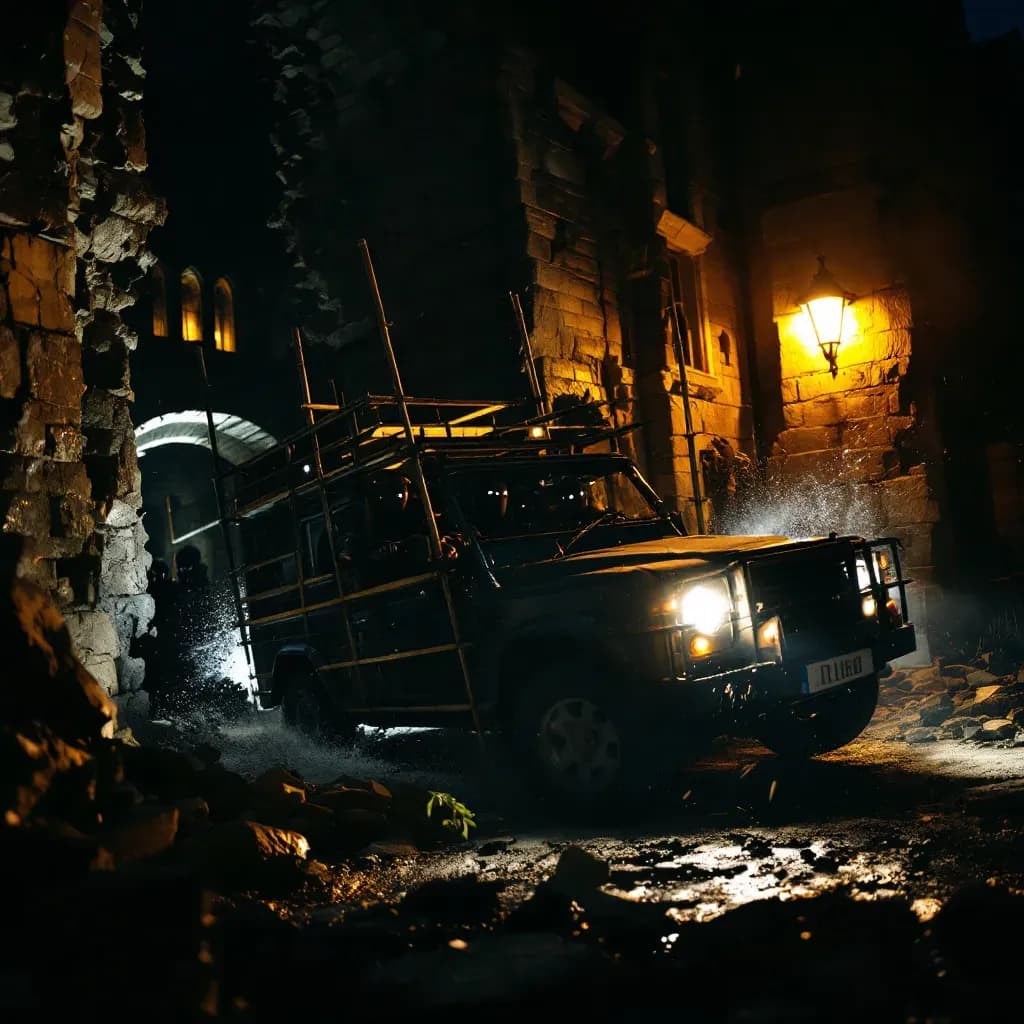
Masked Gang Used Stolen 4x4s to Raid English Stately Homes
£30 million art heist reveals sophisticated tactics in historic property thefts
A masked gang has executed a series of calculated raids on some of England's most historically significant country estates, stealing artworks valued at approximately £30 million. The criminal network's modus operandi—using stolen four-wheel-drive vehicles equipped with scaffolding poles as improvised breaking-and-entering tools—reveals the kind of methodical planning increasingly common in high-value cultural property crimes.
The details of these spectacular thefts have emerged through "They Walk Among Us," a true crime podcast based in Scandinavia. The production uncovered previously unreported information about the gang's operational methods and target selection, shedding light on a form of organized crime that operates across borders and often receives limited international media attention.
While the specific locations, dates, and identities of those involved remain unclear from available English-language sources, the case exemplifies a troubling trend in European art crime: organized teams moving beyond traditional museum or gallery heists to target private collections held in vulnerable historic properties. The use of commercial vehicles and construction equipment—items that can move through British countryside without immediately raising suspicion—suggests operational sophistication and local knowledge.
England's stately home sector represents one of the world's most concentrated repositories of portable cultural wealth. Many estates, while architecturally significant and socially important, operate with security systems designed for an earlier era. The combination of valuable holdings and sometimes-limited modern defenses creates what investigators call "soft targets" for organized theft networks.
The choice of scaffolding poles as breaking tools reflects practical criminal innovation. Unlike cutting equipment or explosives, which would trigger immediate law enforcement attention, such construction materials are unremarkable in rural settings where renovation work is common. This concealment-through-camouflage approach mirrors tactics documented in Scandinavian and Continental European art thefts, where criminal networks have adapted operational methods to exploit law enforcement blind spots.