Netflix Exposes the $100M Antwerp Diamond Heist—A Crime That Defined an Era
New documentary reveals how five criminals pulled off Europe's most audacious theft from the world's diamond capital
Quick Facts
Antwerp, Belgium holds an outsized place in global crime history—not for organized syndicates or street violence, but for a single night in February 2003 that would become a masterclass in precision theft.
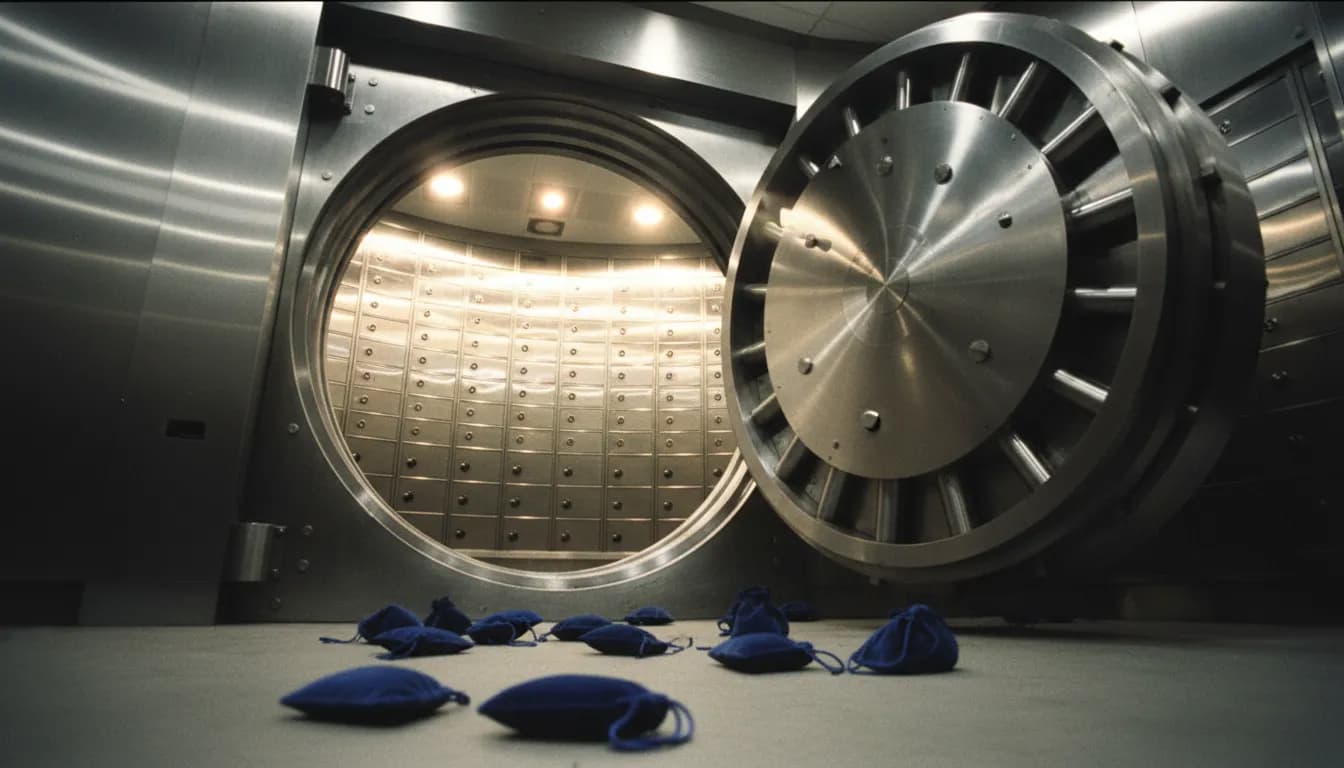
On the evening of February 15, 2003, five criminals executed what law enforcement would later call 'the heist of the century.' Over the course of hours, they stole more than $100 million in loose diamonds, gold, silver, and fine jewelry from the vault beneath the Antwerp Diamond Centre. Much of that loot has never been recovered, making the case a rare convergence of audacity, planning, and mystery that transcends national borders.
The Antwerp Diamond District handles approximately 85% of the world's rough diamonds and 50% of all polished diamonds. It is, in essence, the financial heartland of the global diamond trade—a concentration of wealth that makes it simultaneously a jewel and a target. Security was considered impenetrable. It wasn't.
The operation's architect was Leonardo Notarbartolo, an experienced Italian burglar with a reputation for social engineering and methodical planning. Rather than attempt a direct assault on the vault, Notarbartolo spent roughly two years cultivating access from within. He rented an office in the Antwerp Diamond Centre itself, posing as a multi-lingual gem importer. The lease granted him automatic access to the vault beneath the building—a detail that transformed his presence from suspicious outsider to trusted tenant.
Notarbartolo recruited four accomplices for the execution. Using a specially engineered mechanical device with a hand crank, the team methodically opened 109 of 189 safety deposit boxes. The operation required precision timing and intimate knowledge of the vault's mechanics—details that suggest either inside assistance or months of reconnaissance. The theft itself was executed cleanly and with minimal trace evidence left behind.