True crime news logo
  • News

Sign up for our newsletter and get the latest stories

Never miss the latest true crime news, reviews and top lists — plus new podcasts, series, films and books.

You can unsubscribe with one click from any email.

True crime news logo

The international true crime destination. Cases, documentaries, podcasts and travel routes.

© 2026 truecrime.news. All rights reserved.

Sagsmappe

Chinese State Hackers Breached Thousands via Microsoft Exchange

HAFNIUM's sophisticated 2021 attack exploited zero-day vulnerabilities to infiltrate U.S. organizations across defense, research, and policy sectors

Mappe Åbnet: JUNE 6, 2025 AT 10:00 AM
A compromised Microsoft Exchange server displays a terminal screen filled with cryptic code, cables snaking out as a technician in the background examines the setup, symbolizing the widespread impact of the 2021 Hafnium cyberattack.
BEVIS

Sagsdetaljer

Quick Facts

Klassifikation:

Cybercrime
Espionage
Data breach
Hacking
USA
Texas
Norway

Quick Facts

LocationChina (Hafnium operations origin)

Between January and March 2021, a state-sponsored Chinese threat actor designated HAFNIUM conducted one of the year's most significant cyberattacks, targeting Microsoft Exchange servers used by organizations across the United States and beyond. The attackers remained undetected for approximately two months before Microsoft disclosed the breach on March 2, 2021.

The attack exploited four previously unknown zero-day vulnerabilities in Microsoft Exchange Server versions 2013, 2016, and 2019 running on-premises. Cloud-based Exchange Online services were not affected. The vulnerabilities—tracked as CVE-2021-26855, CVE-2021-26857, CVE-2021-26858, and CVE-2021-27065—allowed attackers to bypass authentication, execute remote code, and establish persistent access within compromised networks.

HAFNIUM's technical sophistication was evident in their exploitation chain. The initial vulnerability, ProxyLogon, enabled unauthorized authentication bypass. Once inside Exchange servers, the attackers deployed web shells—hidden backdoors allowing continued remote access—and extracted sensitive data from the Offline Address Book, a cached directory of user accounts and email addresses. This allowed attackers to steal email credentials and install additional malware for long-term persistence.

Microsoft's Threat Intelligence Center attributed HAFNIUM to China with high confidence. The targeted sectors—infectious disease research organizations, U.S. defense contractors, and policy think tanks—suggested espionage objectives aligned with Chinese strategic interests. While Microsoft did not release exact victim counts, the organization confirmed "thousands" of companies had been compromised.
Denmark
Scandal
Stasi
Internet
Identity theft
Warfare
Corruption
Terror
Remote killing
justitsmordet
hvidvaskning
cybersikkerhed
magtmisbrug
mordssag
justitssvigt
domstol
overerstatningskommission
Sagsstatus
Løst
Sted
China (Hafnium operations origin)
Microsoft's response was swift but the vulnerability's widespread exploitation complicated containment. Within hours of the March 2 disclosure, the company released out-of-band security patches—emergency updates released outside the normal monthly cycle. However, by March 5, Microsoft reported that multiple threat actors beyond HAFNIUM had begun exploiting the same vulnerabilities, accelerating the attack's scope.

Further complicating matters was the patch's complexity. Organizations requiring immediate protection while unable to immediately update received a one-click mitigation tool on March 15. Microsoft released additional investigation guidance on March 16 to help organizations identify whether their systems had been compromised.

The incident's severity prompted extended remediation efforts. Microsoft released four additional security updates on April 13, 2021—CVE-2021-28480, 28481, 28482, and 28483—addressing related vulnerabilities. Final patches followed on May 10, ensuring comprehensive coverage across all affected versions.

For affected organizations, the attack's impact was severe. Attackers gained access to email systems, sensitive communications, and user credentials. The deployment of web shells meant attackers could maintain access even after system reboots, requiring thorough forensic investigation to fully remediate compromised systems. Many organizations discovered the breach only after Microsoft's disclosure, indicating sophisticated operational security by the attackers.

The HAFNIUM attack demonstrated the critical importance of rapid patching and the vulnerability of on-premises systems to determined state-sponsored actors. While Microsoft's coordinated disclosure and patching prevented a "global crisis," the incident exposed how quickly exploits can spread once public. For security teams worldwide, it served as a stark reminder that sophisticated threat actors will exploit unpatched systems at scale.

**Sources:** https://www.microsoft.com/en-us/security/blog/2021/03/02/hafnium-targeting-exchange-servers/ https://www.securityhq.com/blog/securityhq-investigates-hafnium-exchange-server-compromise-10-march-2021/ https://www.infoblox.com/blog/security/hafnium-targeting-exchange-servers-with-zero-day-exploit/ https://www.unveiledsecurity.com/the-assault-on-microsoft-exchange-server/ https://www.sophos.com/en-us/blog/hafnium-advice-about-the-new-nation-state-attack

Read more

The Lazarus Heist: exposing the global cyber threat
Podcast

Inside Lazarus: North Korea's $2 Billion Cyber Empire

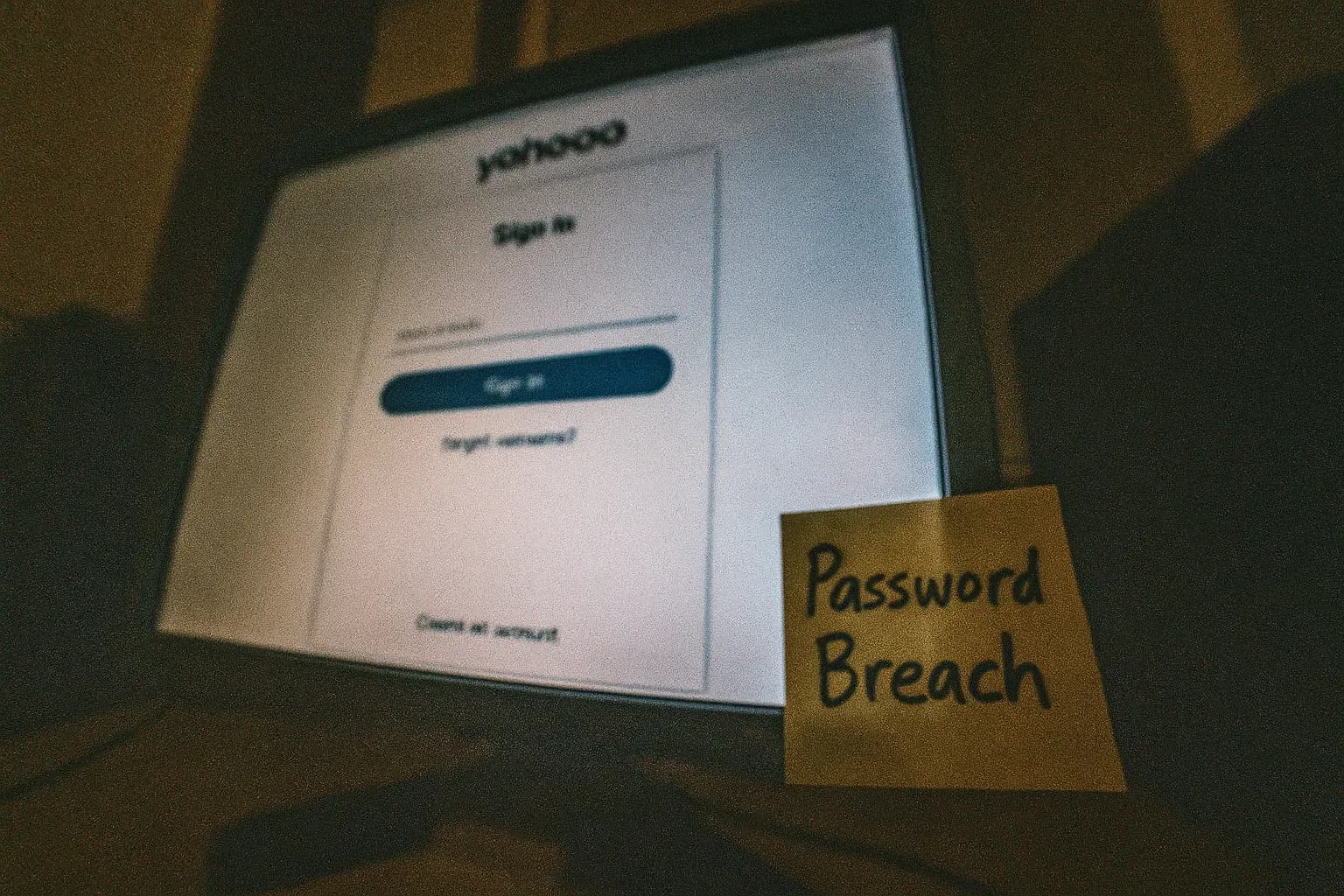
A computer screen displaying a Yahoo login page with a small sticky note that reads "Password Breach" placed nearby, suggesting a breach into user accounts.
Case

Yahoo's 3 Billion Account Breach: History's Largest Hack

A figure resembling Kim Jong-un watches a scene from "The Interview" on a laptop screen, the Sony Pictures logo visible in the background, symbolizing the motive behind the North Korean cyber attack on Hollywood.
Case

North Korea's Hack on Sony: A Cyber Attack on Free Speech

Related Content
The Lazarus Heist: exposing the global cyber threat

Inside Lazarus: North Korea's $2 Billion Cyber Empire

A computer screen displaying a Yahoo login page with a small sticky note that reads "Password Breach" placed nearby, suggesting a breach into user accounts.

Yahoo's 3 Billion Account Breach: History's Largest Hack

A figure resembling Kim Jong-un watches a scene from "The Interview" on a laptop screen, the Sony Pictures logo visible in the background, symbolizing the motive behind the North Korean cyber attack on Hollywood.

North Korea's Hack on Sony: A Cyber Attack on Free Speech

A Starwood-branded server room with tangled Ethernet cables and a laptop displaying a web shell interface, symbolizing the vulnerability exploited in Marriott's data breach affecting 500 million guests

Marriott's Massive Breach: 383 Million Guests Exposed

Advertisement
SS

Susanne Sperling

View all stories →
Share this post: