The Great Escape: 76 Men, One Tunnel, 50 Deaths
How a meticulously planned breakout from a Nazi POW camp became one of WWII's most daring—and tragic—acts of resistance
Sagsdetaljer
Quick Facts
Quick Facts
On the night of March 24-25, 1944, Squadron Leader Roger Bushell led 76 Allied airmen through a tunnel dug beneath Stalag Luft III, a German Luftwaffe prisoner-of-war camp near Sagan in occupied Poland. It was the largest escape attempt from a German POW camp in World War II. It would also become the scene of a Nazi war crime that went largely unspoken for decades.
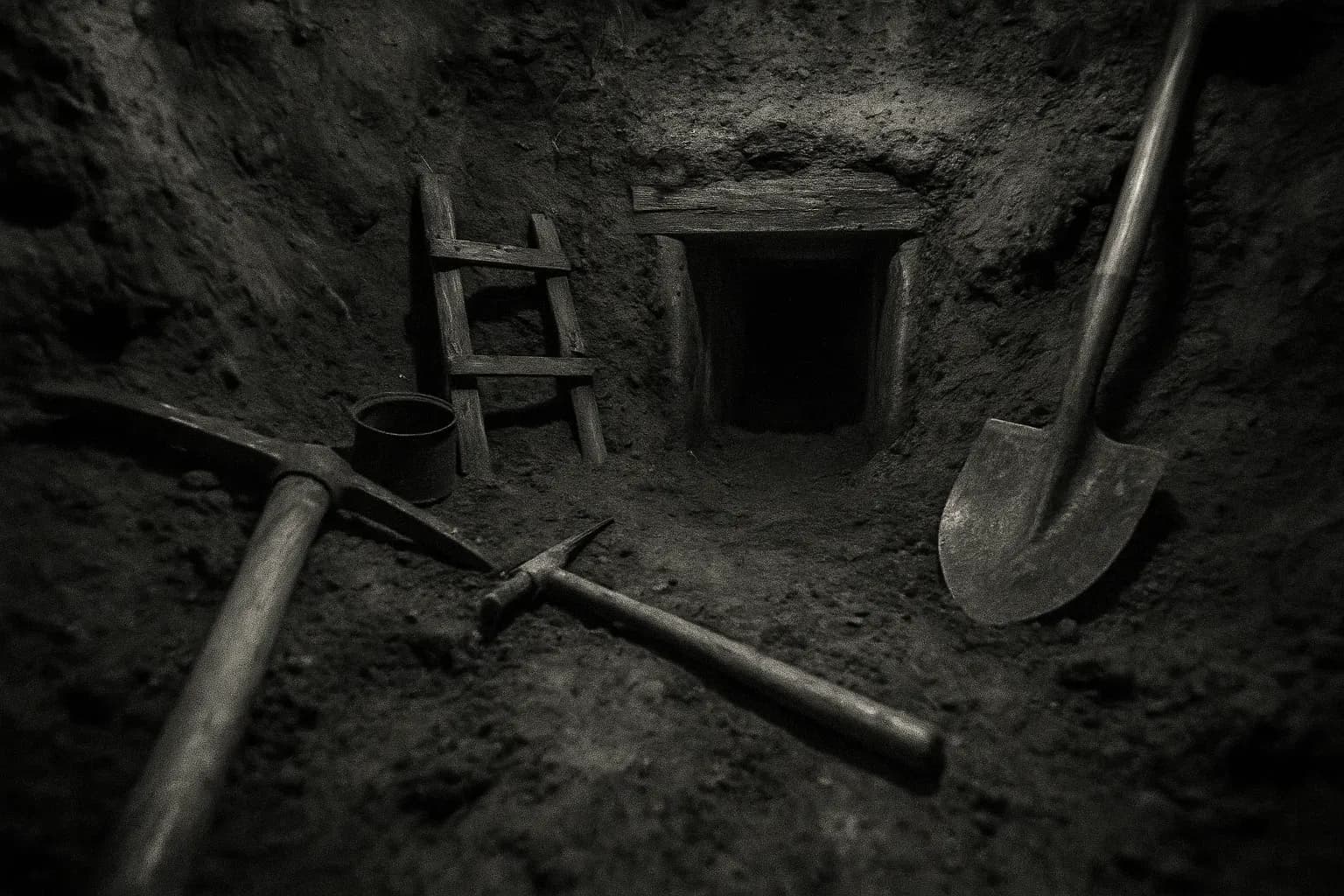
Bushell, a South African-born RAF officer, had been planning the breakout meticulously since his capture in May 1940 after crash-landing his Spitfire during the Dunkirk evacuation. Authorized by senior British officer Herbert Massey, Bushell's Escape Committee oversaw the construction of three tunnels—codenamed Tom, Dick, and Harry. The escape route, Harry, stretched from a hidden entrance beneath a stove in Hut 104, under the Vorlager (outer camp), past the sick hut and isolation cells, and out into the woods beyond the perimeter. It was a feat of engineering and determination carried out under constant guard and the threat of execution.
The camp itself, opened in March 1942 in Germany's Silesia province, held primarily captured Western Allied air force officers. Its commandant, Oberst Friedrich von Lindeiner-Wildau, was a decorated World War I veteran who, by most accounts, ran the camp with relative restraint compared to other German POW facilities. That restraint would soon be tested.
On the night of the escape, discovery came mid-breakout. Guards spotted the tunnel before all 220 planned escapees could get through. In the end, 76 men made it out—a remarkable feat, but not the complete success Bushell had envisioned. What followed was a tragedy that shadowed the escape's legacy.
Within days, 73 of the 76 escapees were recaptured. Only three reached freedom: Per Bergsland and Jens Müller, both Norwegian, made it to neutral Sweden. Bram van der Stok, a Dutch pilot, reached the British consulate in Spain. The other 73 were brought back to the camp or into custody.