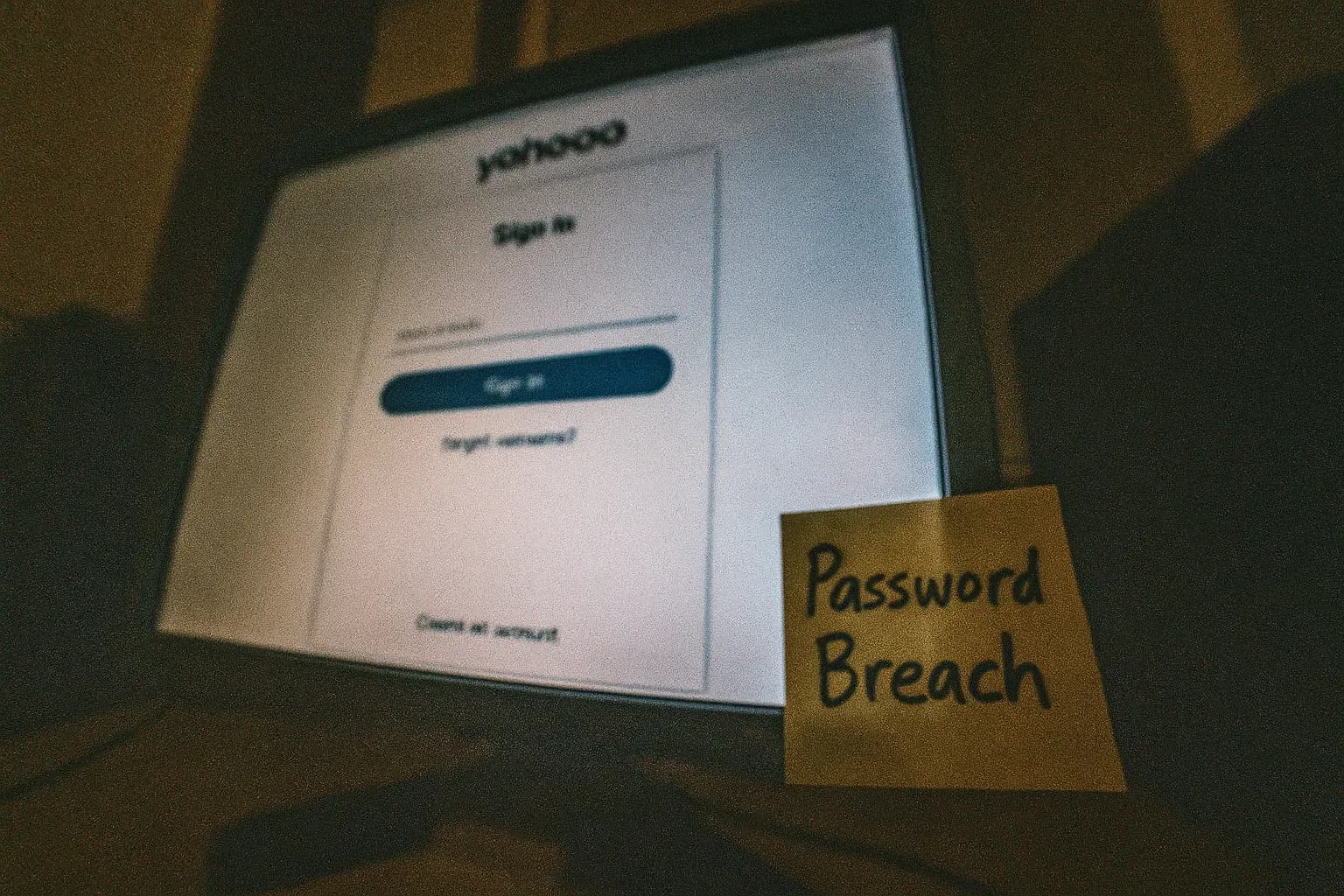
Yahoo's data breach (2013-2014): Scandal's beginning
In August 2013, and again in 2014, the technology company Yahoo was hit by [Internal Link Placeholder] that would prove to be among the largest in history. These cyberattacks, which were only publicly disclosed much later, compromised the personal information of billions of users and revealed serious weaknesses in Yahoo's digital security. The case evolved into a complex story of undetected [Internal Link Placeholder] incidents, outdated technology, and even state-sponsored [Internal Link Placeholder] true [Internal Link Placeholder] [Internal Link Placeholder]. The incidents not only shook Yahoo to its core but also brought critical focus to the general vulnerability surrounding our digital lives and the risk of [Internal Link Placeholder].
August 2013: Three billion Yahoo accounts breached
The first massive [Internal Link Placeholder], which hit Yahoo in August 2013, [Internal Link Placeholder] undetected for years. Only in December 2016 did the company publicly admit that over a billion [Internal Link Placeholder] accounts had been compromised. The shock escalated when a later admission revealed that *all* three billion Yahoo accounts were actually affected by this [Internal Link Placeholder] attack. The attackers had access to Yahoo's systems for more than three years without being discovered, demonstrating an alarming lack of monitoring and robust security. They not only stole extensive user data but also the proprietary code Yahoo used to generate authentication cookies. These digital keys, a form of advanced [Internal Link Placeholder] of intrusion, enabled the hackers to forge login credentials and thereby maintain access to users' accounts, often without the unsuspecting victims noticing.
Cause of 2013 breach: Outdated MD5 encryption broken
Further technical analyses of the 2013 [Internal Link Placeholder], based on collected [Internal Link Placeholder], pointed to a critical vulnerability: Yahoo's use of the outdated MD5 algorithm for hashing [Internal Link Placeholder]. This [Internal Link Placeholder] method was already recognized as insecure at the time. The weak encryption allowed attackers to decrypt the majority of the stolen passwords using brute-force attacks. Security experts estimated that up to 90% of MD5-hashed passwords could be quickly cracked with the computing power available at that time.
2014 attack: FSB espionage and Baratov's account hacks
As if that weren't enough, Yahoo was hit by another massive [Internal Link Placeholder] in 2014, this time involving user data from 500 million accounts. This [Internal Link Placeholder] attack revealed an even darker aspect of the case: a direct link to [Internal Link Placeholder] state-sponsored [Internal Link Placeholder]. Four men, including Canadian hacker Karim Baratov, were later indicted in the U.S. for carrying out the attack on behalf of the Russian intelligence agency FSB. According to the indictment from U.S. authorities, FSB agents used the stolen information to target and monitor journalists, government officials, and [Internal Link Placeholder] leaders globally. Karim Baratov, who operated under the pseudonym "webhacker," specialized in hacking [Internal Link Placeholder] and webmail accounts on demand. He often used sophisticated phishing pages that perfectly mimicked legitimate password reset sites—an effective [Internal Link Placeholder] method that gave him access to a large number of accounts. In 2018, Baratov was sentenced to five years in prison and a significant fine by a U.S. court for his role in this extensive cybercrime.
Consequences: Identity theft risk and stolen questions
The stolen user data from both the 2013 and 2014 Yahoo [Internal Link Placeholder] included critical personal information, such as names, [Internal Link Placeholder] addresses, phone numbers, birth dates, and weakly encrypted [Internal Link Placeholder]. Particularly valuable to the attackers were the stolen security questions and answers. These could often be used to bypass additional security measures, such as two-factor authentication, thereby maintaining long-term, undetected access to users' private communications and increasing the risk of [Internal Link Placeholder]. The massive data breaches revealed not only Yahoo's severe technical vulnerabilities in digital security but also a significant delay in acknowledging and disclosing these cyberattacks. This led to widespread criticism of the company's management and its handling of the extensive [Internal Link Placeholder].
Sources:
Want to delve into more cases of cybercrime, hacking, and their consequences for victims? Follow KrimiNyt and get the darkest stories directly in your feed.