True crime news logo
  • Nyheder
True crime news logo

The international true crime destination. Cases, documentaries, podcasts and travel routes.

© 2026 truecrime.news. All rights reserved.

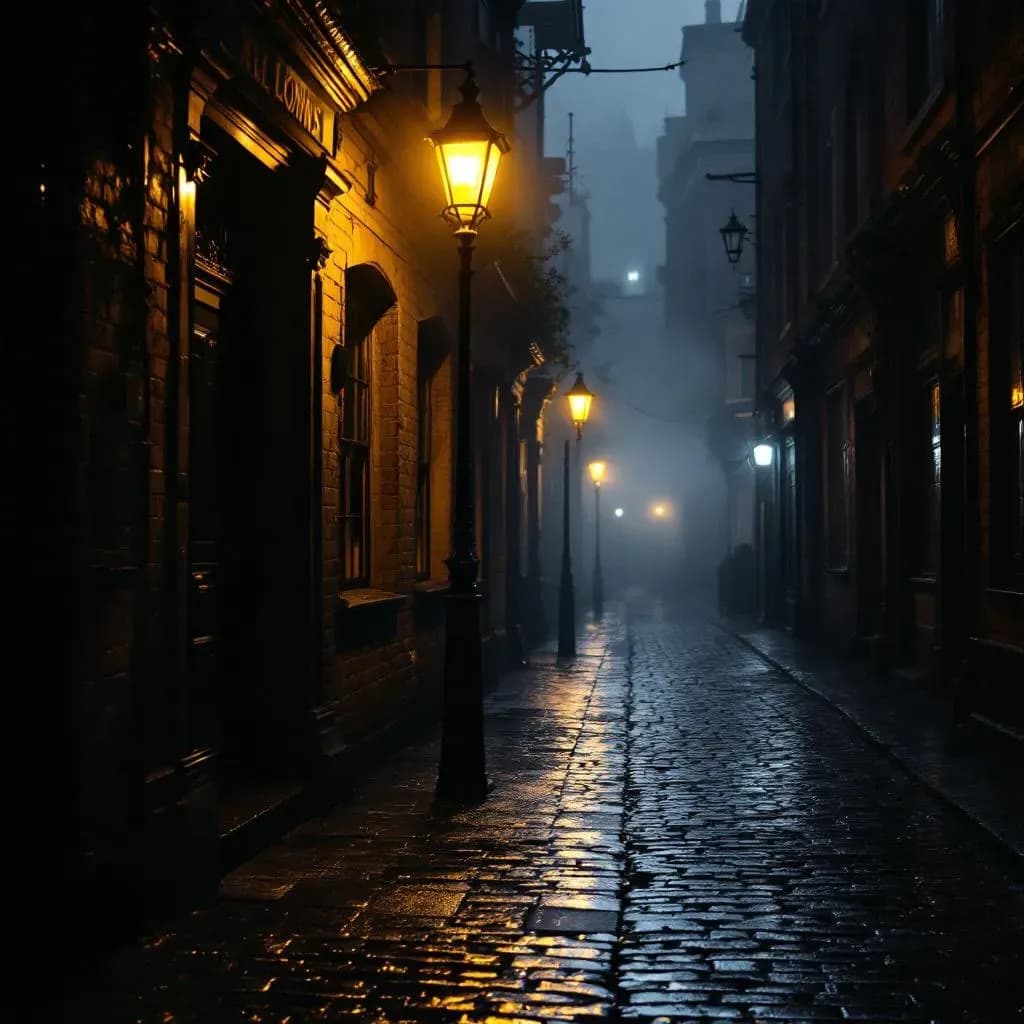
Mørkt brolagt smøge i victoriansk London om natten, gaslampe og tåge, Jack the Ripper rute 1888

Walking the Jack the Ripper Murder Sites in London

A guide to the canonical crime scenes of 1888 Whitechapel, now walkable landmarks in East London

By
Susanne Sperling
Published
May 6, 2026 at 12:00 AM

Quick Facts

An unidentified serial murderer prowled the narrow, unlit alleys of Whitechapel and Spitalfields in autumn 1888, claiming at least five victims in a killing spree that would define an era. Today, all the canonical Jack the Ripper murder sites lie within a walkable radius of less than one square mile—a journey through London's East End that takes roughly an hour to complete.

The first canonical victim, Mary Ann Nichols, was discovered on 31 August 1888 at approximately 3:40 AM on Buck's Row (now Durward Street, Whitechapel). Her throat had been cut. The body was found by Charles Cross, a local carter. The site is now a car park near a former Board School converted into flats—a stark reminder of how thoroughly the Victorian streets have been rebuilt.

A week later, on 8 September 1888, Annie Chapman's mutilated body was found in the backyard of 29 Hanbury Street in Spitalfields. The discovery marked an escalation in the killer's violence and confidence. The location today houses an art gallery, making it one of the more easily identifiable modern landmarks on the route.

The most dramatic night came on 30 September 1888—remembered as the "Double Event." Elizabeth Stride was murdered around 1:00 AM in Dutfield's Yard off Berner Street (now Henriques Street, Whitechapel). Her throat was cut, and evidence suggests a witness or interruption may have limited the killer's time with the body. Less than an hour later, at approximately 1:45 AM, Catherine Eddowes was attacked in Mitre Square near Aldgate—then under City of London jurisdiction rather than the Metropolitan Police's authority. Her body, discovered by PC Watkins, bore extensive mutilation. Notably, Eddowes had been arrested for drunkenness earlier that evening, released from custody around 1:00 AM, giving her just minutes of freedom before her fatal encounter.

The final canonical murder occurred on 9 November 1888 in a room located in Miller's Court, off Dorset Street in Spitalfields. Mary Jane Kelly's body showed the most severe mutilation of all five victims—a difference attributed to the killer's ability to work indoors without fear of interruption. Dorset Street was notoriously lawless at the time; the murder site is now built over in what has become an affluent neighborhood.
While these five murders form the "canonical" list accepted by most researchers, other victims are sometimes associated with the killings. Martha Tabram, found stabbed 39 times in George's Yard Buildings (now Gunthorpe Street) on 8 August 1888, is frequently cited as a possible first victim, though the differing method—stabbings rather than throat cuts—and the violence level suggest a different killer. Emma Smith, attacked on 3–4 April 1888 in the Osborn Street area, was beaten rather than cut, and is not typically attributed to the Ripper.

The killer was never caught, identified, or tried. The murders remain unsolved more than 135 years later. Yet the locations endure. Landmarks like the Ten Bells pub, where some victims were known to drink, still stand. Modern plaques and guided tours mark the sites. Walking these streets today—past converted flats, galleries, and shops—offers an eerie connection to one of history's most infamous unsolved serial killings.

Sources:

https://inspiringcity.com/2014/01/04/jack-the-ripper-locations-in-whitechapel-aldgate-and-spitalfields/

https://www.jack-the-ripper-tour.com/locations/

https://www.jack-the-ripper.org/jack-the-ripper-murder-sites.htm

https://www.londonmuseum.org.uk/collections/london-stories/jack-ripper/

http://www.jack-the-ripper.org/jack-the-rippers-london-today.htm

Read more

Stille dansk forstadshave om vinteren, terrassesten, bare træer, grå himmel, Odense
Rute

The Peter Lundin Case: Denmark's Most Horrifying Triple Murder

Mørk kælderkorridor i victoriansk bygning, mursten, glødende pærer, H.H. Holmes Murder Castle Chicago 1893
Rute

Inside H.H. Holmes' Murder Castle: Chicago's Dark Secret

Tom parkeringsplads i Californien om natten, enkelt gadelygtte, Zodiac Killer mordsted 1969
Rute

Tracing the Zodiac Killer's Bay Area Crime Spree

Related Content
Stille dansk forstadshave om vinteren, terrassesten, bare træer, grå himmel, Odense

The Peter Lundin Case: Denmark's Most Horrifying Triple Murder

Mørk kælderkorridor i victoriansk bygning, mursten, glødende pærer, H.H. Holmes Murder Castle Chicago 1893

Inside H.H. Holmes' Murder Castle: Chicago's Dark Secret

Tom parkeringsplads i Californien om natten, enkelt gadelygtte, Zodiac Killer mordsted 1969

Tracing the Zodiac Killer's Bay Area Crime Spree

Norsk kyststig ved tusmørke, fjord og lyng, Karmøy, Birgitte Tengs-sagen 1995

The Scream Route: Following Norway's Most Infamous Crime

Advertisement

Susanne Sperling

Admin

Share this post:
Mørkt brolagt smøge i victoriansk London om natten, gaslampe og tåge, Jack the Ripper rute 1888

Walking the Jack the Ripper Murder Sites in London

A guide to the canonical crime scenes of 1888 Whitechapel, now walkable landmarks in East London

By
Susanne Sperling
Published
May 6, 2026 at 12:00 AM

Quick Facts

An unidentified serial murderer prowled the narrow, unlit alleys of Whitechapel and Spitalfields in autumn 1888, claiming at least five victims in a killing spree that would define an era. Today, all the canonical Jack the Ripper murder sites lie within a walkable radius of less than one square mile—a journey through London's East End that takes roughly an hour to complete.

The first canonical victim, Mary Ann Nichols, was discovered on 31 August 1888 at approximately 3:40 AM on Buck's Row (now Durward Street, Whitechapel). Her throat had been cut. The body was found by Charles Cross, a local carter. The site is now a car park near a former Board School converted into flats—a stark reminder of how thoroughly the Victorian streets have been rebuilt.

A week later, on 8 September 1888, Annie Chapman's mutilated body was found in the backyard of 29 Hanbury Street in Spitalfields. The discovery marked an escalation in the killer's violence and confidence. The location today houses an art gallery, making it one of the more easily identifiable modern landmarks on the route.

The most dramatic night came on 30 September 1888—remembered as the "Double Event." Elizabeth Stride was murdered around 1:00 AM in Dutfield's Yard off Berner Street (now Henriques Street, Whitechapel). Her throat was cut, and evidence suggests a witness or interruption may have limited the killer's time with the body. Less than an hour later, at approximately 1:45 AM, Catherine Eddowes was attacked in Mitre Square near Aldgate—then under City of London jurisdiction rather than the Metropolitan Police's authority. Her body, discovered by PC Watkins, bore extensive mutilation. Notably, Eddowes had been arrested for drunkenness earlier that evening, released from custody around 1:00 AM, giving her just minutes of freedom before her fatal encounter.

The final canonical murder occurred on 9 November 1888 in a room located in Miller's Court, off Dorset Street in Spitalfields. Mary Jane Kelly's body showed the most severe mutilation of all five victims—a difference attributed to the killer's ability to work indoors without fear of interruption. Dorset Street was notoriously lawless at the time; the murder site is now built over in what has become an affluent neighborhood.
While these five murders form the "canonical" list accepted by most researchers, other victims are sometimes associated with the killings. Martha Tabram, found stabbed 39 times in George's Yard Buildings (now Gunthorpe Street) on 8 August 1888, is frequently cited as a possible first victim, though the differing method—stabbings rather than throat cuts—and the violence level suggest a different killer. Emma Smith, attacked on 3–4 April 1888 in the Osborn Street area, was beaten rather than cut, and is not typically attributed to the Ripper.

The killer was never caught, identified, or tried. The murders remain unsolved more than 135 years later. Yet the locations endure. Landmarks like the Ten Bells pub, where some victims were known to drink, still stand. Modern plaques and guided tours mark the sites. Walking these streets today—past converted flats, galleries, and shops—offers an eerie connection to one of history's most infamous unsolved serial killings.

Sources:

https://inspiringcity.com/2014/01/04/jack-the-ripper-locations-in-whitechapel-aldgate-and-spitalfields/

https://www.jack-the-ripper-tour.com/locations/

https://www.jack-the-ripper.org/jack-the-ripper-murder-sites.htm

https://www.londonmuseum.org.uk/collections/london-stories/jack-ripper/

http://www.jack-the-ripper.org/jack-the-rippers-london-today.htm

Read more

Stille dansk forstadshave om vinteren, terrassesten, bare træer, grå himmel, Odense
Rute

The Peter Lundin Case: Denmark's Most Horrifying Triple Murder

Mørk kælderkorridor i victoriansk bygning, mursten, glødende pærer, H.H. Holmes Murder Castle Chicago 1893
Rute

Inside H.H. Holmes' Murder Castle: Chicago's Dark Secret

Tom parkeringsplads i Californien om natten, enkelt gadelygtte, Zodiac Killer mordsted 1969
Rute

Tracing the Zodiac Killer's Bay Area Crime Spree

Related Content
Stille dansk forstadshave om vinteren, terrassesten, bare træer, grå himmel, Odense

The Peter Lundin Case: Denmark's Most Horrifying Triple Murder

Mørk kælderkorridor i victoriansk bygning, mursten, glødende pærer, H.H. Holmes Murder Castle Chicago 1893

Inside H.H. Holmes' Murder Castle: Chicago's Dark Secret

Tom parkeringsplads i Californien om natten, enkelt gadelygtte, Zodiac Killer mordsted 1969

Tracing the Zodiac Killer's Bay Area Crime Spree

Norsk kyststig ved tusmørke, fjord og lyng, Karmøy, Birgitte Tengs-sagen 1995

The Scream Route: Following Norway's Most Infamous Crime

Advertisement

Susanne Sperling

Admin

Share this post: